
Juneteenth and the Legacy of Pickled Watermelon Rinds
By Amanda Henson
June 19, 1865, marked a turning point in Galveston, Texas. On that day, Union soldiers arrived to announce a long-overdue truth: enslaved African Americans in the region were free. Though the Emancipation Proclamation had taken effect over two years earlier, the news—and their freedom—had been deliberately withheld. With the arrival of the Union Army came not just liberation, but the promise that their freedom would finally be enforced.
Just one year later, those newly freed Texans began commemorating the day with community gatherings, prayer, music, and feasting. They called it "June 19th" or the "Nineteenth of June"—what we now know as Juneteenth.
As a descendant of Black Texans—and the grandchild of one who eventually made their way to California—Juneteenth has always been part of my story. Every summer, my family would caravan from California back to the sticks of East Texas for our annual family reunion and Juneteenth celebration.
As a child, I didn’t yet grasp the full weight of Juneteenth’s story. A narrative rooted in delay, in suffering—but also in joy, resilience, and rebirth. What I did understand was the food.
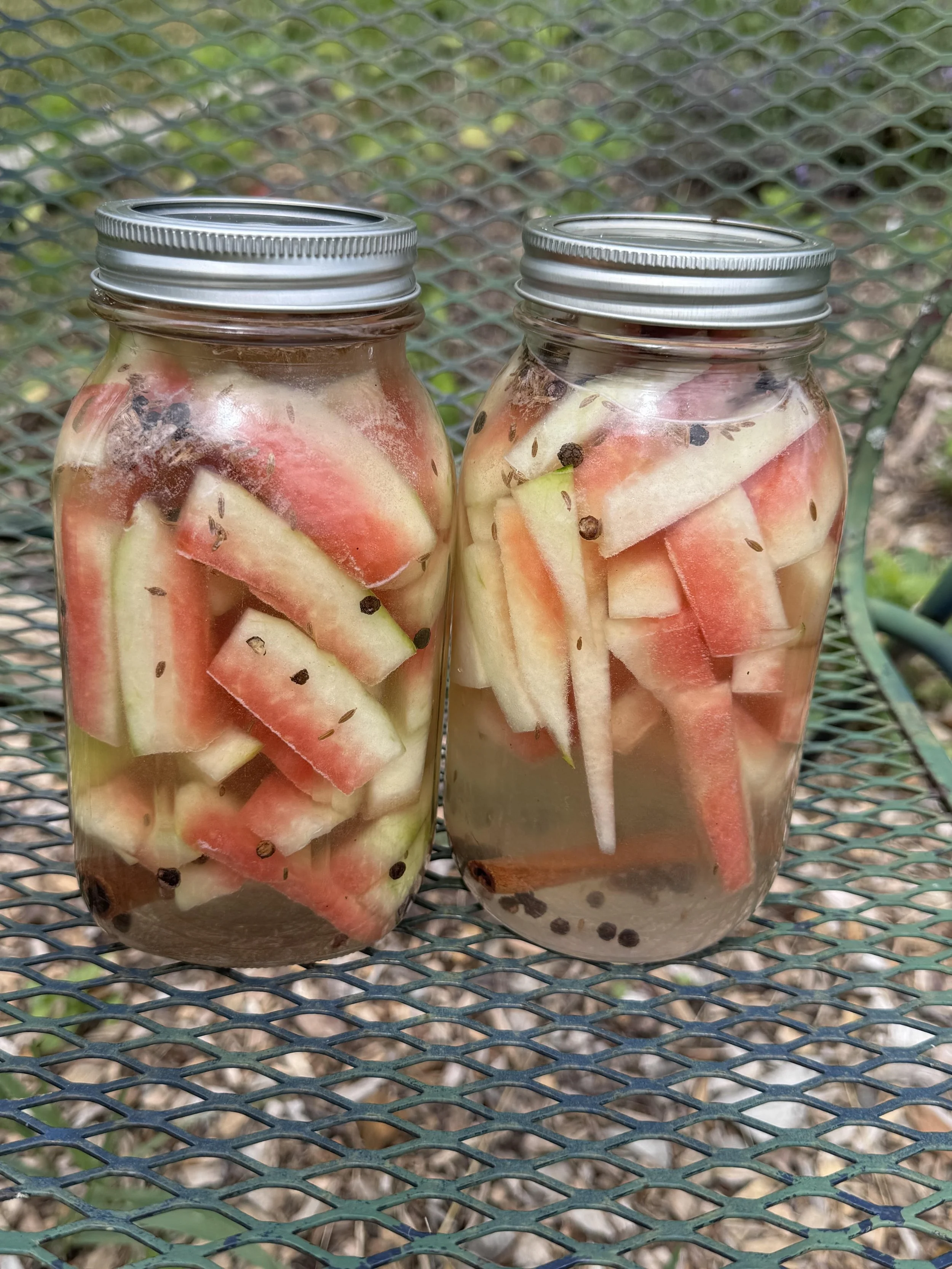
I remember barbecue so good it made me forget I was a vegetarian, red velvet cake baked outdoors over open flames (because Texas summer and no air conditioning, yikes!) Watermelon, fresh off the vine, best enjoyed while drinking cold water straight from the garden hose. And one humble dish that perfectly captures the creativity, resilience, and resourcefulness of Black American cooking: pickled watermelon rind. Tangy, slightly sweet, sometimes spicy, with the perfect crunch. It’s a humble dish, but it speaks volumes.
Juneteenth food traditions often center around the color red: barbecue glazed in deep crimson sauce, ruby-hued drinks, slices of watermelon, and red velvet cake. Red symbolizes the blood shed during slavery and the long fight for freedom that followed.
In that spirit, here’s a family-favorite recipe that celebrates Juneteenth’s legacy.
Southern-Style Pickled Watermelon Rinds
Prep Time: 30 minutes active, 30 minutes inactive
Cook Time: 15 minutes
Total Time: 1 hour 15 minutes
Servings: 12–16 (makes about 1 quart)
Ingredients
4 cups watermelon rind, peeled and diced (a bit of pink flesh left on is fine—preferred, even)
1 cup apple cider vinegar
1 cup water
¾ cup white sugar
¼ cup coarse kosher salt
1 tablespoon mixed whole or ground spices (e.g., peppercorns, bay leaves, star anise, cinnamon sticks, fennel seeds, cumin seeds, dried peppers)
Instructions
Prepare the Rind:
Cut off both ends of the watermelon. Stand it upright, then slice off the rind in quarters, leaving a small amount of red flesh attached.
Cut each piece into 1-inch planks, then remove the outer green skin.
Cube the remaining white-pink rind and set aside.
Make the Pickling Liquid:
In a large non-reactive pot, combine the vinegar, water, sugar, salt, and spices. Bring to a boil over medium-high heat.
Cook the Rind:
Add the diced rind to the boiling mixture. Bring it back to a boil, then turn off the heat. Let the mixture cool for about 30 minutes.
Jar and Store:
If using jars, add a few extra whole spices for flavor. Ladle the pickled rinds into jars or containers and let them cool completely before sealing.
Store in the refrigerator for up to two weeks.
Optional: For Longer Storage (Canning)
Sterilize jars and lids in boiling water. Let them cool slightly.
Ladle the cooled mixture into the jars, leaving ½-inch headspace.
Seal the jars and process in a boiling water bath for 10 minutes.
Cool at room temperature for 24 hours. Label and store for up to one year. Refrigerate after opening.