


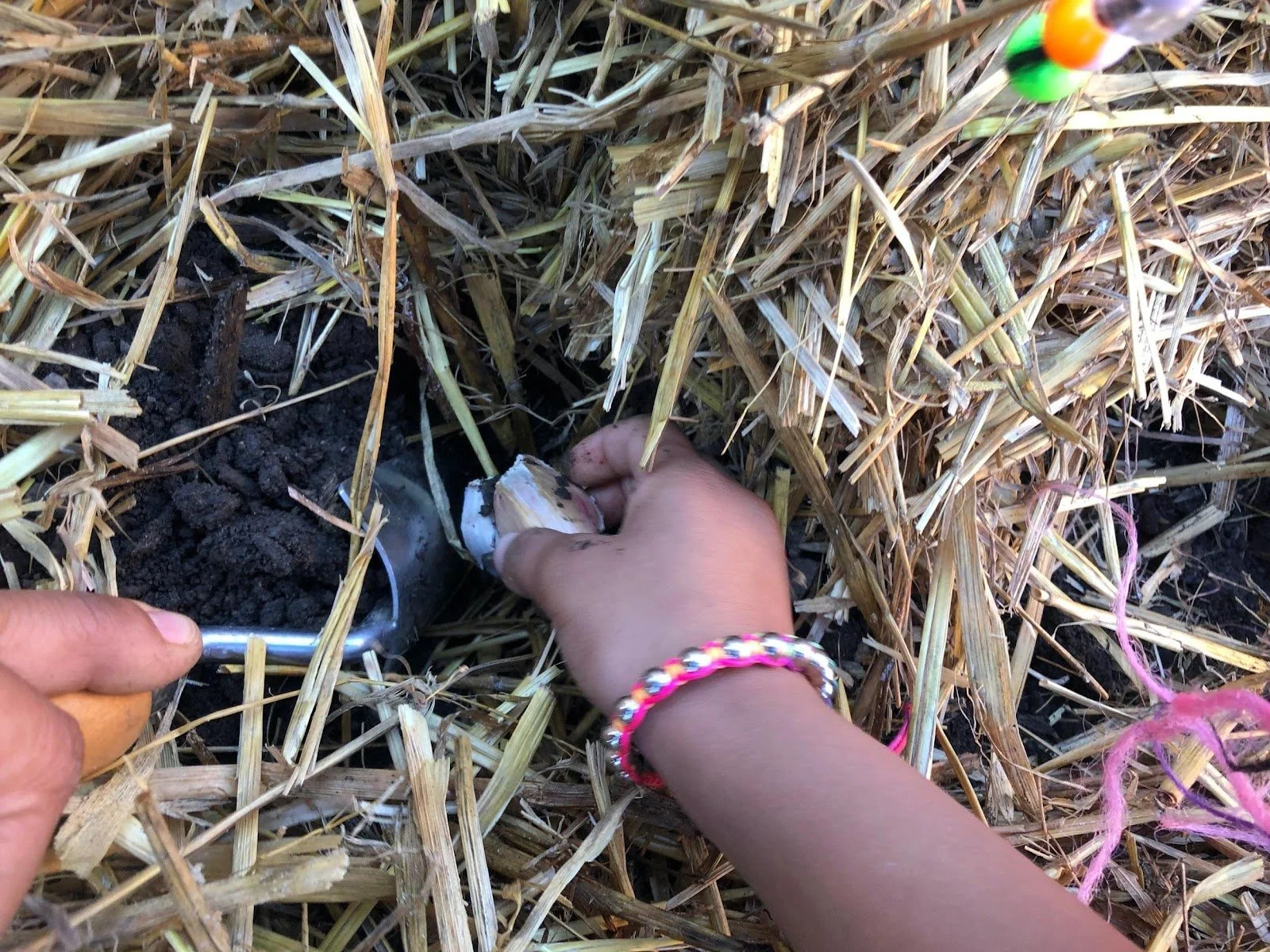
Today Kathryn shows us how to harvest the carrots she planted in her container garden at home.
In the previous video Kathryn planted carrots from seed in a 10 inch container at the end of April. Now that about 100 days have passed, we are going to dig them up and talk about replanting for the Fall! This container ended up yielding about 40 carrots, which weighed roughly 4 pounds.
Supplies:
A container with carrots that are ready to harvest
A watering can or hose to water and loosen the soil
A hand trowel (optional) to help dig out the roots
Steps:
Determine if your carrots are ready to harvest by looking for the top of the root poking out the soil, and by using your seed packet as a guide. Different varieties, and growing conditions will affect the number of days you will need to wait to harvest.
Water the soil deeply with your watering can or hose.
Grab the top of the root of the carrot, which is sticking out the soil, and wiggle it loose from the soil. You can use a hand trowel to help dig them out if necessary.
Rinse your carrots off, and remove the greens before storing them in your fridge.
Use the greens like an herb for seasoning dishes or in pesto! Use the roots to snack on raw, in a dish like our Vietnamese Spring Rolls, or with other vegetables in a pickle recipe, soup, or salad. You can find more recipes on our YouTube channel!
If you live in the Poughkeepsie area, you can replant carrot seeds in mid to late August for a Fall harvest. You will want to harvest them again before the soil freezes completely, but they can survive a frost, and will get sweeter!
Watch the video to Learn to Grow Carrots in Containers on our YouTube.
Food Share Mapping
Food Share Mapping: Growing Community Through the Food Share Program at Poughkeepsie Farm Project

If you’ve tasted the produce we grow at PFP, you know it’s delicious - but have you ever wondered where the rest of our harvest goes? This summer we had Vassar Community Fellow Ben Bachman working with our team to create a StoryMap that explores how our Food Share Program makes PFP produce available in Poughkeepsie and all throughout the Hudson Valley. Our Food Share program is one part of our commitment to food justice and addressing food insecurity in Poughkeepsie - with 40,000 pounds of produce donated in 2019 alone.
Scroll through to discover interactive maps and other content that illustrates our effort to grow community by sharing our harvest.
Click on the image below to go to the story map:

October Harvest of the Month - Beets!
By: Ben Bachman, Vassar Community Fellow
Behold the bright red beet! The summer harvest season may be winding down, but beets are one colorful vegetable that you can harvest long into the fall. That’s why, at PFP, beets are our October Harvest of the Month.
Cooking Ideas
Greens or roots, you can eat both parts of the beet! With so many delicious ways to prepare beets, there are plenty of ways for everyone to find something they enjoy.
Rinse your beets and a whole world of possibilities open up. Young beet greens and roots are good eaten raw. Chop them up and toss them in a salad to try their cool, rich flavor. No need to peel the roots - healthy vitamins and minerals are hidden in the skin. Cook beet greens as you would spinach or chard by steaming or sauteing. For beet roots, steam or boil until you can poke them with a fork. Drain and rinse with cool water and your beets are ready to eat however you want them! Here’s a tip: Beets are super easy to peel after you boil and rinse them - just make sure you let them cool first. You may want to peel off the skin, especially when you have bigger, older beets. Another cooking option, one that really brings out beets’ unique flavor, is roasting them in the oven.
Even now we’ve only scratched the surface of what beets can do. At PFP, our favorite beet-based recipes range from soups to smoothies! Take that for food power!
Nutrition
If we’re talking food power, beets pack a major punch. Beet roots get their striking color from a nutrient called betaine, which is a known antioxidant with anti-inflammatory and detoxifying properties.
What about the rich, earthy flavor of beet roots? That comes from trace amounts of a substance called geosmin. This is the very same substance that causes the fresh smell of soil after rainfall.
What’s more - beet roots are unusual among vegetables for their high concentration of sugar. While you won’t find them in the grocery store, some types of beets are used for commercial sugar production: as much as 20 percent of the world’s sugar comes from beets!
This of course brings up another important point about beets - not all beets look alike! You might be familiar with the red “table beet”, but beets can also be white, like sugar beets, or purple, pink - even golden yellow. Beets are the perfect vegetable to help you eat the R A I N B O W!

One of our favorite colorful beets, the golden beet! Image from Baker Creek Seeds.
Now you know all about beet roots, but WAIT - there’s more! Remember how I said beets pack a major food power punch? Don’t pass up the beet greens! The greens contain even more nutrients than beet roots!!
Beets come from the same plant family as spinach and chard. All of these foods are known for being dense in nutrients, but beet greens are especially rich. They have twice the amount of iron as spinach! Beets are packed with other nutrients too, including vitamin C, fiber, magnesium, and potassium.
All these nutrients help keep your heart ‘beeting’ by building healthy blood and improving nerve and muscle function.

Kreiger School Cooking Pre-Covid-19
Storage
To store beets, cut the greens from the root a few inches above the stem. In a perforated bag or wrapped in damp paper towel fresh beet greens will last 3 to 5 days in the refrigerator. Beet roots keep for 2 to 4 weeks in the refrigerator. In a dark cellar they last even longer - up to 3 months.
Beet Dye and Coloring Page
As you’re cooking beets, you might notice that beet roots leave red marks on the cutting board and turn cooking water red. They might even stain your fingers! Doesn’t it seem like that color might be put to good use?
Of course it can - beets can be used to make paint! To make your own beet-based paint, just cook then blend some beet roots. Add water to finish the paint and you’re ready to create a beety masterpiece with a paintbrush and some paper. Practice shading by changing the amount of water you mix with your paint.
Beet stains easily, so you may want to wear a smock while you’re painting. Salt can help remove beet stains from fingers after painting or cooking.
Below you’ll find a coloring page where you can use your beet paint to make your own rainbow beets (crayons, markers, or colored pencils work fine too).
Grower's Row: It's Pickle Season
Every year, our cucumbers and zucchini look GREAT... until early to mid August, when cucurbit downy mildew blows in on moist, mid-summer winds. This powdery pest decimates our cucumbers, zucchini, melons, and other susceptible members of the Cucurbitaceae family.
So: if you've got some cucumbers lingering in your fridge from last week's share and you've always wanted to try your hand at making pickles, NOW is the time!
There are two types of pickles.
Fermented pickles are vegetables submerged in a salt-water brine. The fermentation process creates the sourness. (Think traditional full- or half-sours.) Fermented pickles have live probiotics.
Vinegar pickles are vegetables submerged in a salt-vinegar-water brine. The salt and vinegar permeate the vegetable and flavor them. These can be an easier way to dip your toe into the world of pickling.
Both of these kinds of pickles can be canned (using a hot water bath or pressure canner, making them shelf-stable) or refrigerated for weeks to months.

Vinegar Pickles
The basic idea here is that you wash and pack your cucumbers into jars. Heat some water to boiling and then mix in enough salt and vinegar that it tastes good to you. (You want it to be slightly saltier and more vinegary than you want your pickles to taste.) Either heat this brine with whatever seasonings you want (garlic, dill, peppercorns, coriander, mustard seed, and hot pepper are common flavorings) or stuff the seasonings into the bottom of your cucumber jars. Pour the hot brine on top, seal the lid, and refrigerate for 1-2 weeks before you sneak a taste. Or follow a canning recipe to make them shelf-stable
Try:
Bread and Butter (Refrigerator) Pickles
Easiest Dill (Refrigerator) Pickles
Preparing Dill Pickles for Canning
Fermented Pickles
There are many recipes out there, but many fermented pickles use a brine of 1 tbsp (non-iodized) salt to 2 cups (filtered/non-chlorinated) water plus seasonings. Follow a tried-and-true recipe, such as this one, or experiment.
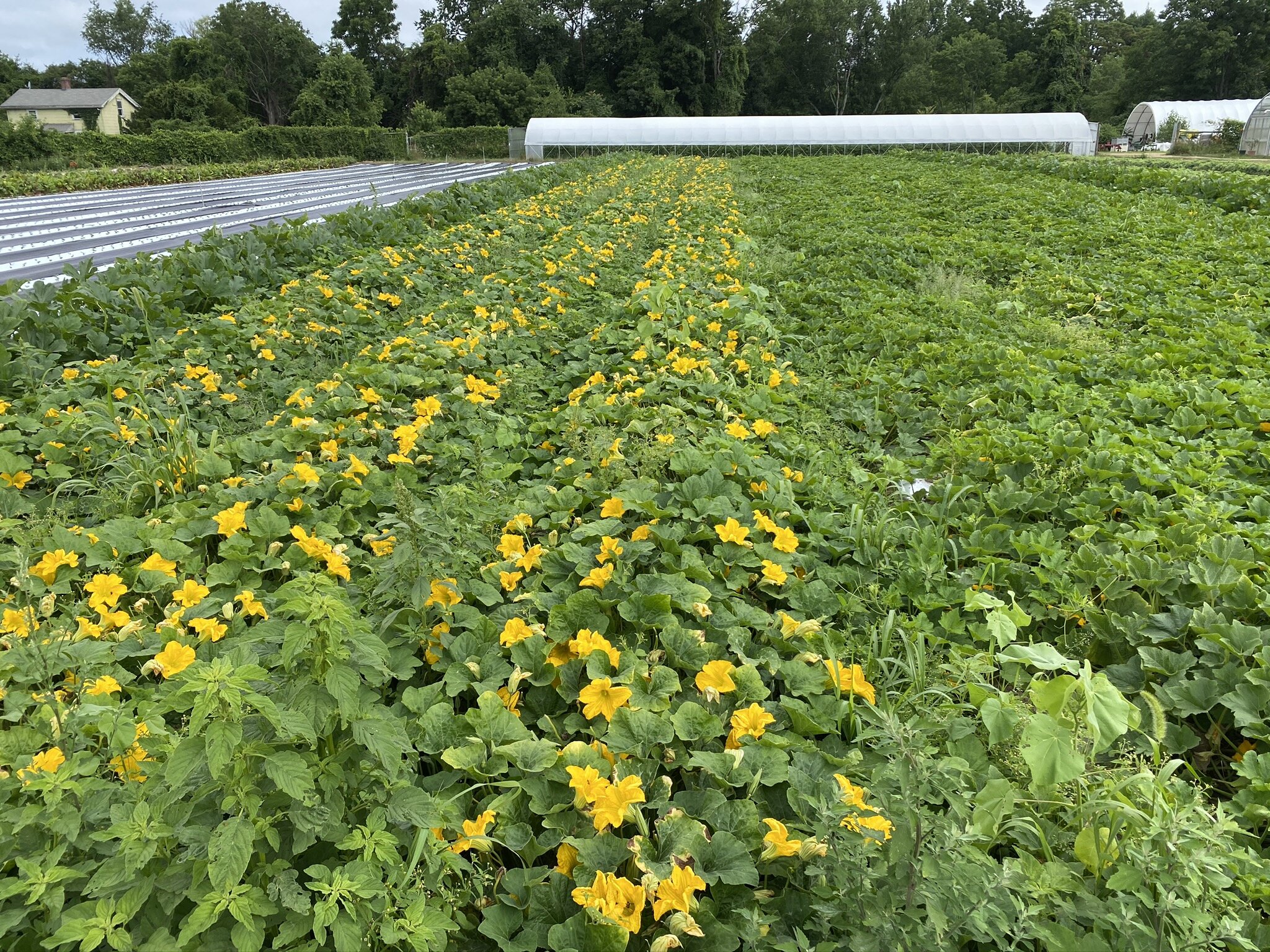
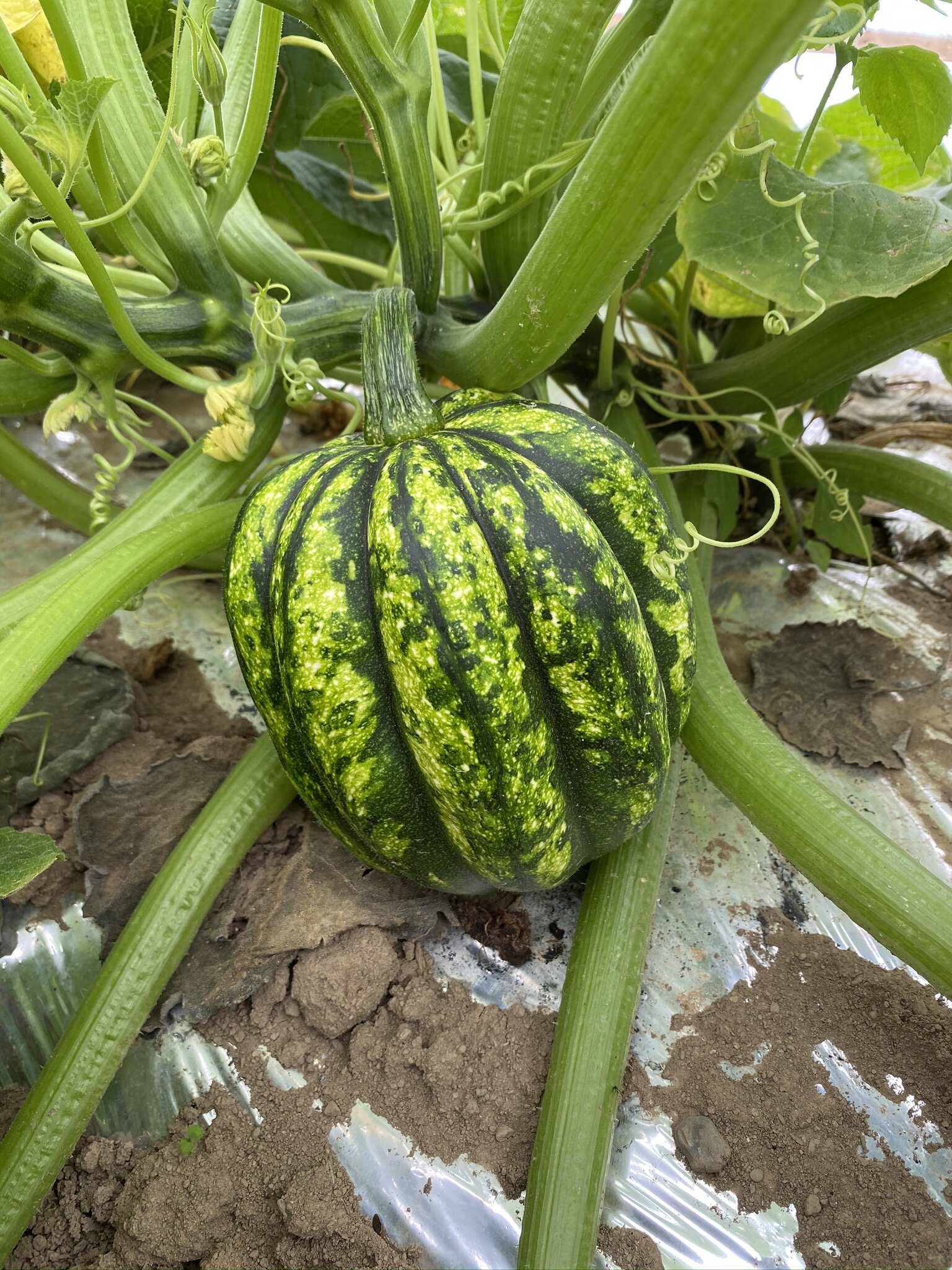
The end of cucumber season doesn't mean the end of cucurbits! Their hardier, autumnal cousins, the winter squash, are ripening in the fields. Look forward to acorn, delicata, spaghetti, black futsu and butternut squash appearing in CSA shares starting late August into September and October.
(Read more about cucumbers in last month's blog post, Conversation on Cucumbers.)
What’s Up, Watermelon?
By Kate Leahey, Education Intern
Watermelons are one of our favorite summer snacks! If you’ve ever tasted a delicious slice of cold watermelon on a hot summer day, then you can understand why. Watermelons are a whopping 92% water, great for staying hydrated in the hot months. Thousands of years ago, ancient civilizations treasured this trait of watermelons. They would pummel watermelons into a juicy pulp full of water to provide enough water for everyone. Today’s watermelons are much sweeter and have softer rinds than the ancient ones, so we can enjoy the delicious flesh on the inside without having to do any pummeling. This month we are celebrating this sweet, cooling treat as our Harvest of the Month for August!

What do we know about watermelon plants? For starters, they are in the same plant family as other melons, squash, cucumbers, and pumpkins. Like the other members of their family, watermelons are vine-like plants that produce flowers. People grow watermelons all over the world, and there are thousands of different varieties. Though many of us may be used to watermelons that are bright red on the inside, they actually come in lots of different colors, like orange, yellow, white, and light pink. The outside part of the watermelon -- the rind -- can be many different colors, too. Some varieties have golden rinds, others have purple, and one variety called the “Moon and Stars” even has a green-black rind with yellow circles, making it look like the night sky. How cool is that?

People have been enjoying watermelon for years -- they are thought to have been cultivated first 5,000 years ago based on watermelon seeds that were found in the tombs of Pharaohs in ancient Egypt. Today, people all over the world enjoy their delicious taste and refreshing coolness. We have already mentioned how wonderful watermelons are in the summer because of their high water content, but the health benefits don’t end there. Watermelons contain significant levels of Vitamin C (an antioxidant that is also great for skin and teeth), Vitamin A (helps your eyesight and maintains healthy bodily tissues), and Potassium (good for heart health and well-functioning muscles and nerves). Watermelon also has anti-inflammatory properties due to its lycopene content and can help improve digestion because it is high in fiber. There are so many wonderful reasons to bite into a slice of watermelon!

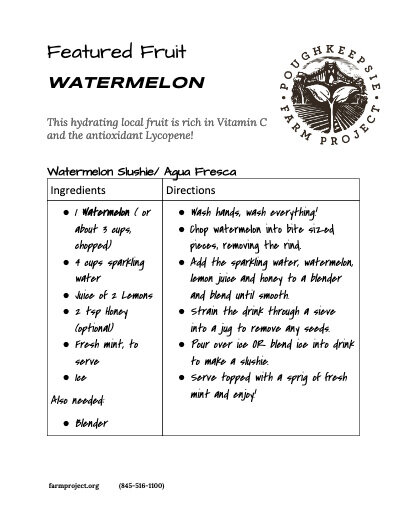
At PFP, we grow watermelon varieties like Little Baby Flower, Dark Belle, and Mini Love. While the fruit is delicious all on its own, there are plenty of ways to use watermelon in summer dishes, such as in a watermelon, basil, and feta salad, or mixed together with some cucumber slices and mint. Check out our recipe ideas, educational flyers, and a coloring page below!
Resources




Remember Those Kohlrabi?

Kohlrabi Carrot Fritters with Herbed Carrot Puree
Ingredients
Carrot Puree:
2 Tablespoon canola oil
4 cloves fresh garlic, minced*
8 ounces carrot, chopped*
¼ cup almond milk
½ teaspoon paprika
1 teaspoon sea salt
Fritters:
10 ounces Kohlrabi, shredded*
6 ounces carrot, shredded*
½ cup all-purpose flour (GF: chickpea flour)
1 teaspoon salt
2 Tablespoon lemon juice
½ teaspoon paprika
½ teaspoon garlic powder
Instructions
Carrot Puree:
Put two tablespoons of canola oil in a small saucepan on medium heat. When oil is simmering, add garlic.
When garlic is aromatic, add carrot and cook until tender.
Take the pan off the burner and put the garlic and carrots in the blender with paprika and salt.
Blend the mixture until smooth.
Set puree aside in a dish for later.
Fritters:
Preheat oven to 400 degrees Fahrenheit.
Shred carrot and kohlrabi, squeeze out extra juice from vegetables and pat them dry.
Place the shredded kohlrabi and carrot on a baking sheet lined with tinfoil. Put them in the oven for 12-15 minutes. While waiting, heat a small amount of oil in a saucepan.
When shredded vegetables are roasted, place them in a bowl with flour, salt. lemon and the other spices. Combine these ingredients thoroughly.
Form this batter into small patties. Add more flour if necessary. Chill the patties for 15 minutes in your refrigerator.
Take the patties out of the fridge. Put paper towels on a plate and set it beside the burner you are frying the fritters on.
Preheat the oven to 350 degrees Fahrenheit.
Heat oil in a medium sauté pan on medium high heat until it shimmers.
Fry each side of the patty until golden brown and place in oven for 7 minutes to finish cooking.
Serve fritters hot or cold with carrot puree and chopped parsley to garnish.
*PFP Note: These are all items that should be in the July & August CSA shares!
Harvest Stinging Nettle with Larissa and Kate
Learn how to harvest and use your own stinging nettle at home! Larissa and Kate teach us about stinging nettle and share some exciting uses and recipes from the Poughkeepsie Farm Project Herbal Meditation Garden.
Stinging Nettle grows all around the world and is recognized by its heart-shaped leaves with stinging hairs on them. The leaves, flowers, stems and roots can all be used after cooking. Stinging Nettle is extremely nutritious—it is a great source of protein and other vitamins and minerals.
Finally, stinging nettle is used traditionally as a medicinal herbal remedy to relieve seasonal allergies and joint pain, to support healthy blood sugar, and more! When harvesting and using stinging nettle, make sure to wear gloves to protect your hands!
Tea Recipe Supplies
2 handfuls Stinging Nettle leaves
2 cups water
Honey (optional)
Lemon (optional)
Steps
Place nettle leaves in jar or mug.
Pour boiling water over leaves, allow to steep several minutes.
Pour through strainer to remove leaves; save leaves for other recipes and uses.
Add lemon and/or honey if desired, and enjoy!
Pesto Recipe Supplies
4-6 cups stinging nettle leaves (or about 1 cup leaves leftover from tea)
2-3 medium garlic cloves
¼ cup nuts or seeds
¼ cup vegetable or olive oil
2 tsp lemon juice or vinegar
¼ cup Parmesan cheese (optional)
Salt and pepper to taste
Steps
If using raw leaves, place in boiling water 1-2 minutes (using gloves or tongs to handle leaves carefully).
Wring leaves dry with towel.
Combine leaves with remaining ingredients in food processor.
Enjoy with fresh veggies, bread, pasta, meat, salad, etc.
Make Comfrey Oil with Larissa and Ben
Join Ben and Larissa on a trip to the Meditation Garden at PFP! Together, they show us how to make an infused oil from the comfrey plant.
Comfrey is an herb with a long history of medicinal use. Inside each comfrey leaf is a gooey sap with healing properties. This sap is the main ingredient in our comfrey oil, which can be used on the skin to moisturize, promote healing, and reduce inflammation. If you want to do more with your comfrey oil, you can also make it into a soothing salve with beeswax.
Happy infusing!
Supplies
Knife and cutting board
Slow cooker
Strainer or slotted spoon
Mason jars
Ingredients
Comfrey leaves
Olive oil
Steps
Harvest comfrey leaves.
Cut comfrey leaves into narrow strips.
Fill slow cooker with cut comfrey leaves.
Cover cut comfrey with olive oil. Amount depends on the size of your slow cooker and how much
comfrey you have.
Cook on low every day for 7 days, 2 hours each time. When condensation collects inside the lid, wipe
it off.
Strain finished comfrey oil using a strainer or a slotted spoon and discard leaves. To tell when it is done, look for a blackish green color.
Pour or strain into Mason jars.
Growers Row: Hustle and Bustle
We farmers have been busy—so busy that we didn't even have time to write this post!
Decreasing the size of Workshare shifts (to maintain a safe working environment for our members) means we've lost 50 person-hours of labor a week to help manage weeds.
Packing 530 boxes weekly means we're up 30 person-hours of labor a week just to get CSA shares out the door.
And then there's harvest. On Mondays our all-women harvest crew pulls, cleans, and bands an average of 650 bunches of various crops. (Switching to pre-packed boxes has meant an increase in labor spent bunching and bagging things we would normally put out loose, like chard and arugula.) Last week we harvested over 2,000 lbs of cucumbers alone, and next week we'll need to start harvesting tomatoes, with eggplant close on their heels (if tomatoes had heels).
Finally: In order to continue providing the freshest, most nutritious and delicious produce in the safest way possible for our members, we're having to rethink and re-create so many of our systems. Changing systems takes time... at a time of the season when there isn't a minute to spare.
In short: we are so busy we don't even have time to write this post!
So instead, here are some of the photos we've been too busy to share with you on Facebook or Instagram:
We bought a fancy expanding roller-table for packing boxes every week. The set-up required some real feats of physical pretzeling, and squashed a few fingers in the process -- but here it is all set up, and working great!

Left: Isabel unpacks the rolling table. Right: Erin maneuvers it onto a pallet during set-up back in April, and secures it in our new-and-improved wash station in May.
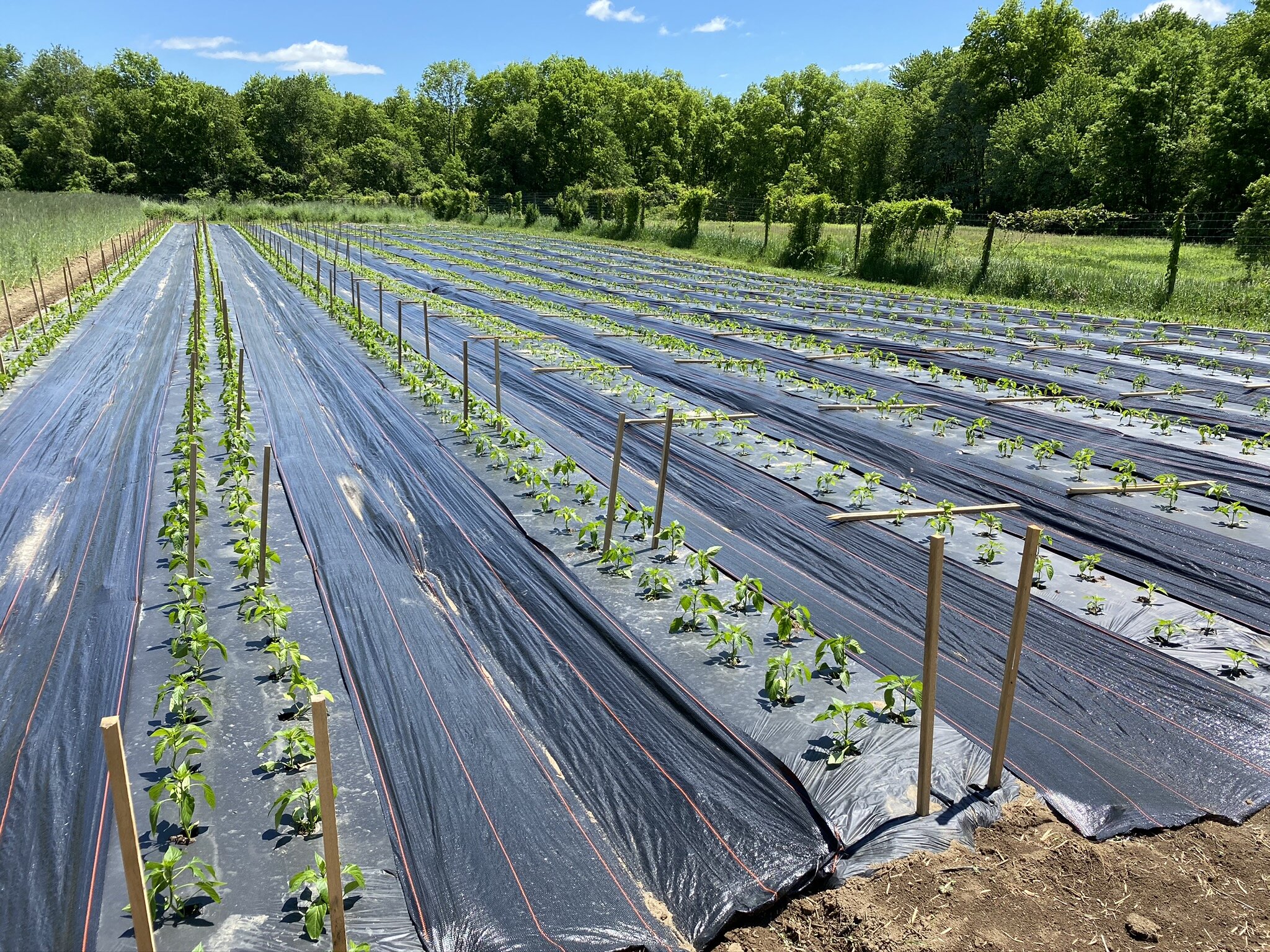
We bought a new tent for our new drive-through CSA Distribution! We are upping our pepper-staking and trellising game this year, so keep your fingers crossed for a good pepper crop.

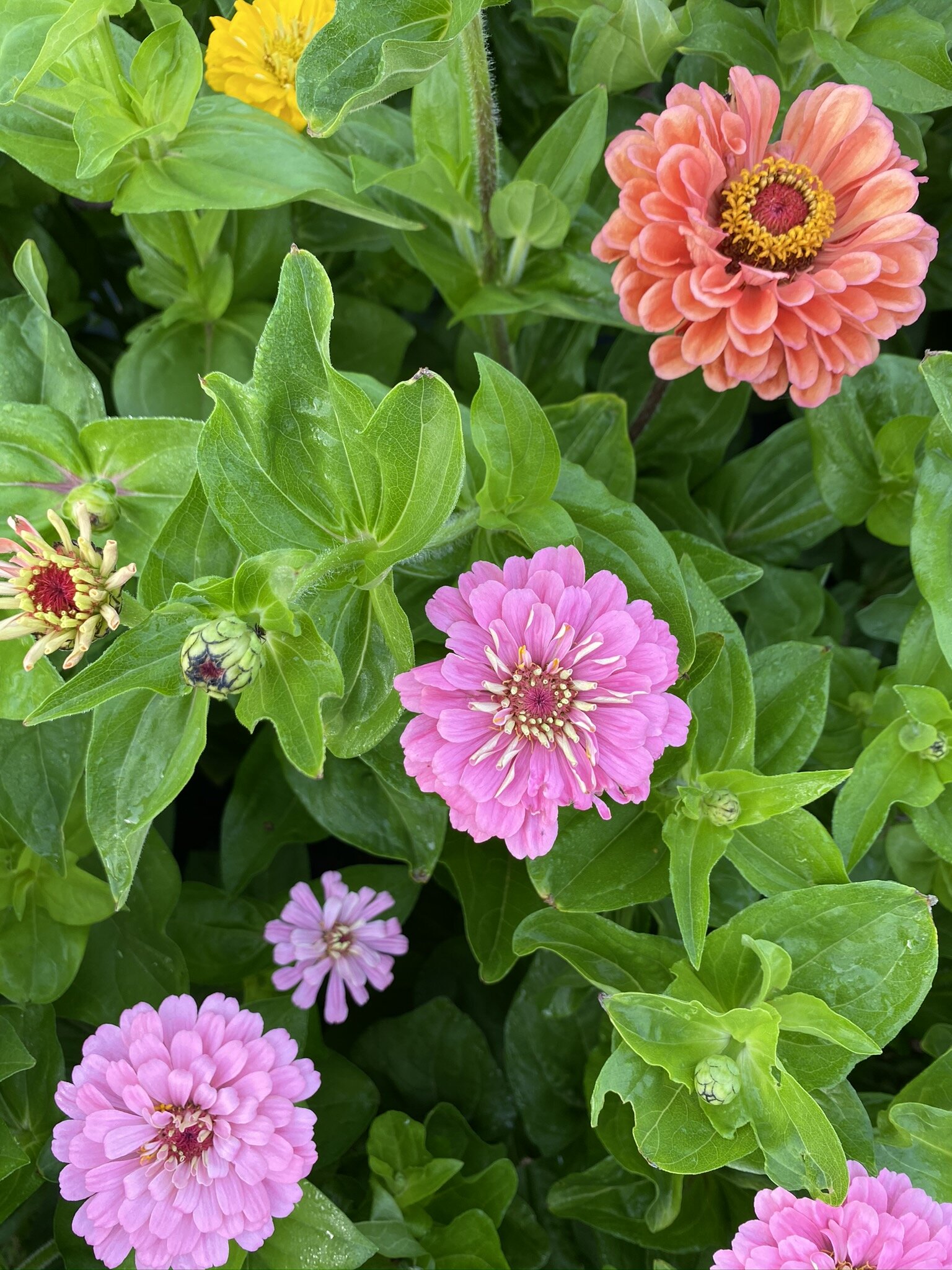
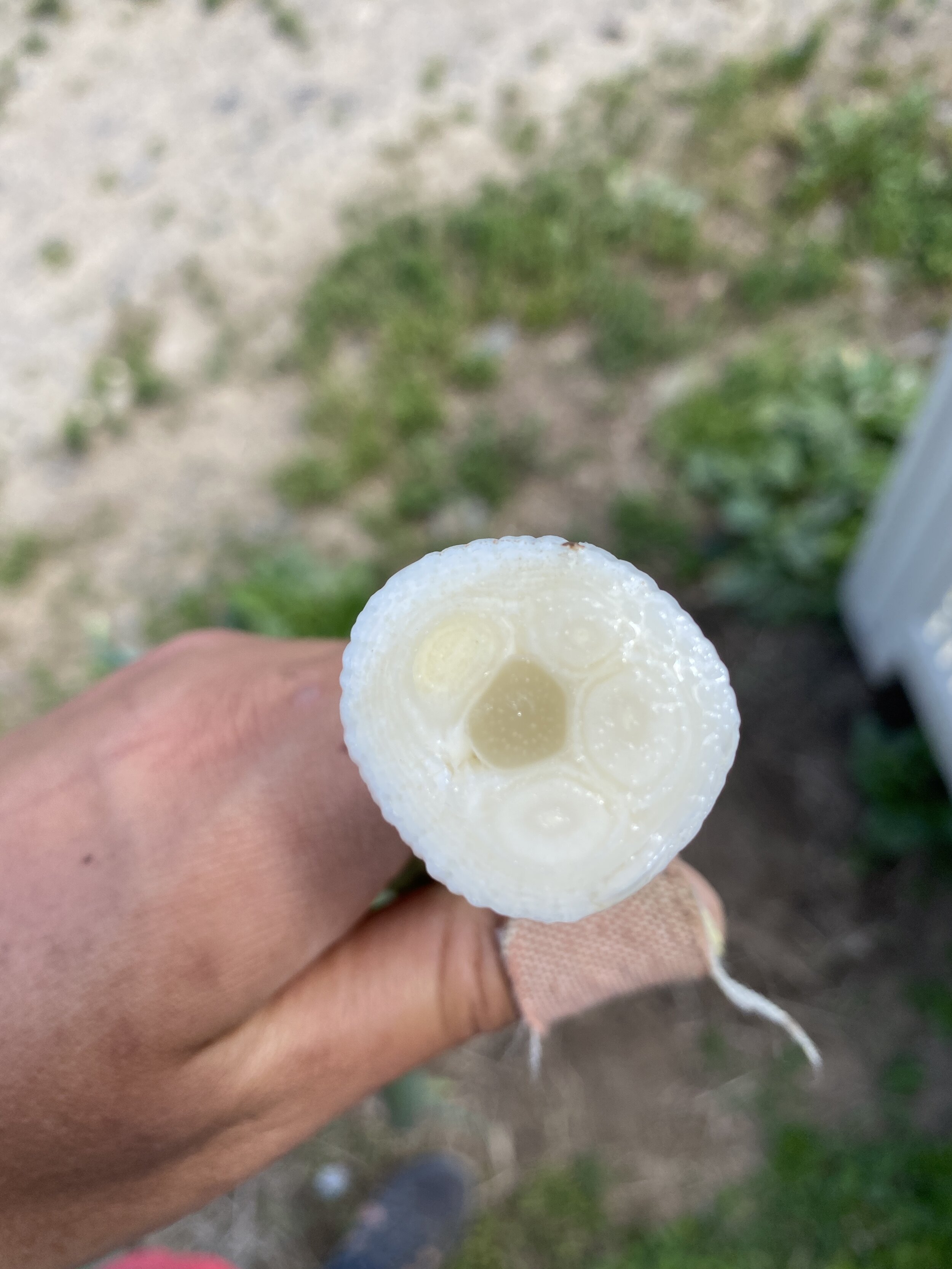
We've been checking the PYO flowers (they're open for picking this week!) and garlic clove differentiation (they're almost fully developed!)
To continue to offer PYO during the outbreak, we have installed a handwashing station and limited the number of people picking at any one time. So far it's working well - and we've welcomed many CSA members to pick one of the best strawberry crops we've seen in a few years!


New generations of baby ladybeetles have been flourishing on the farm and helping us keep our aphid problems in check! (Top: ladybeetle eggs hatching. Middle: ladybeetle larvae. Bottom: ladybeetle lovin'.)

PS If you see one of these little alligator-looking dudes in your CSA share, don't squish them! Put them in your backyard or in your garden where they can grow into adult ladybugs
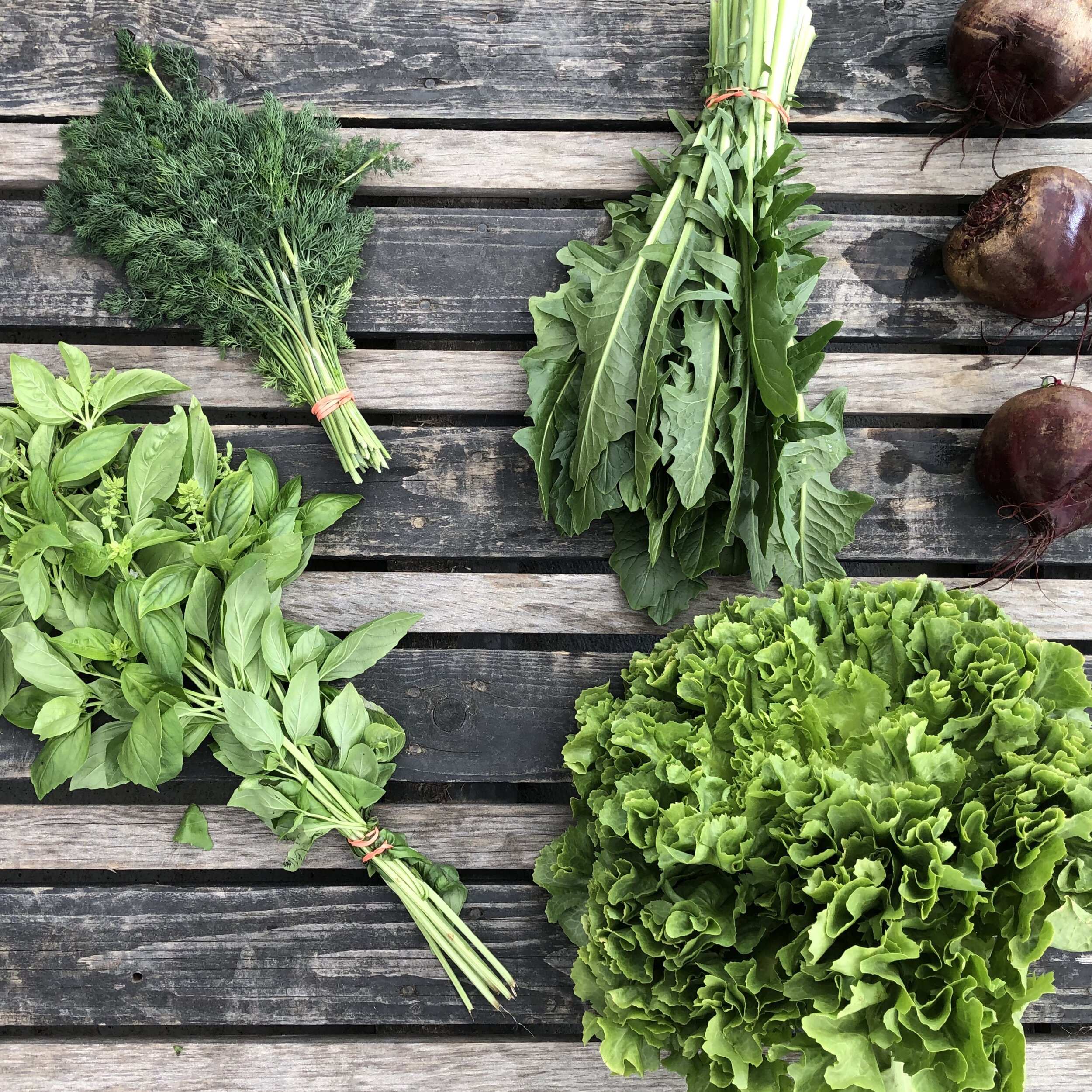
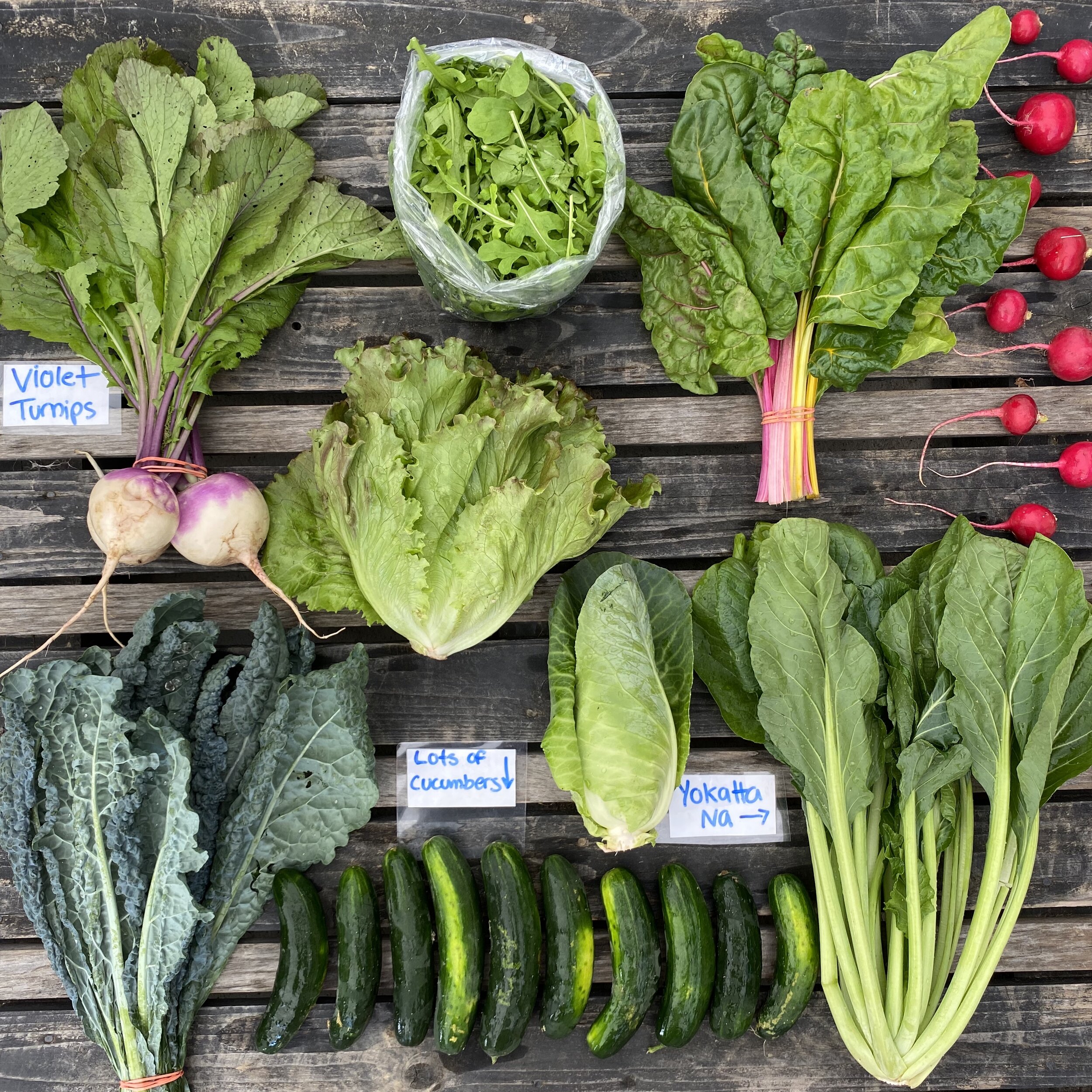
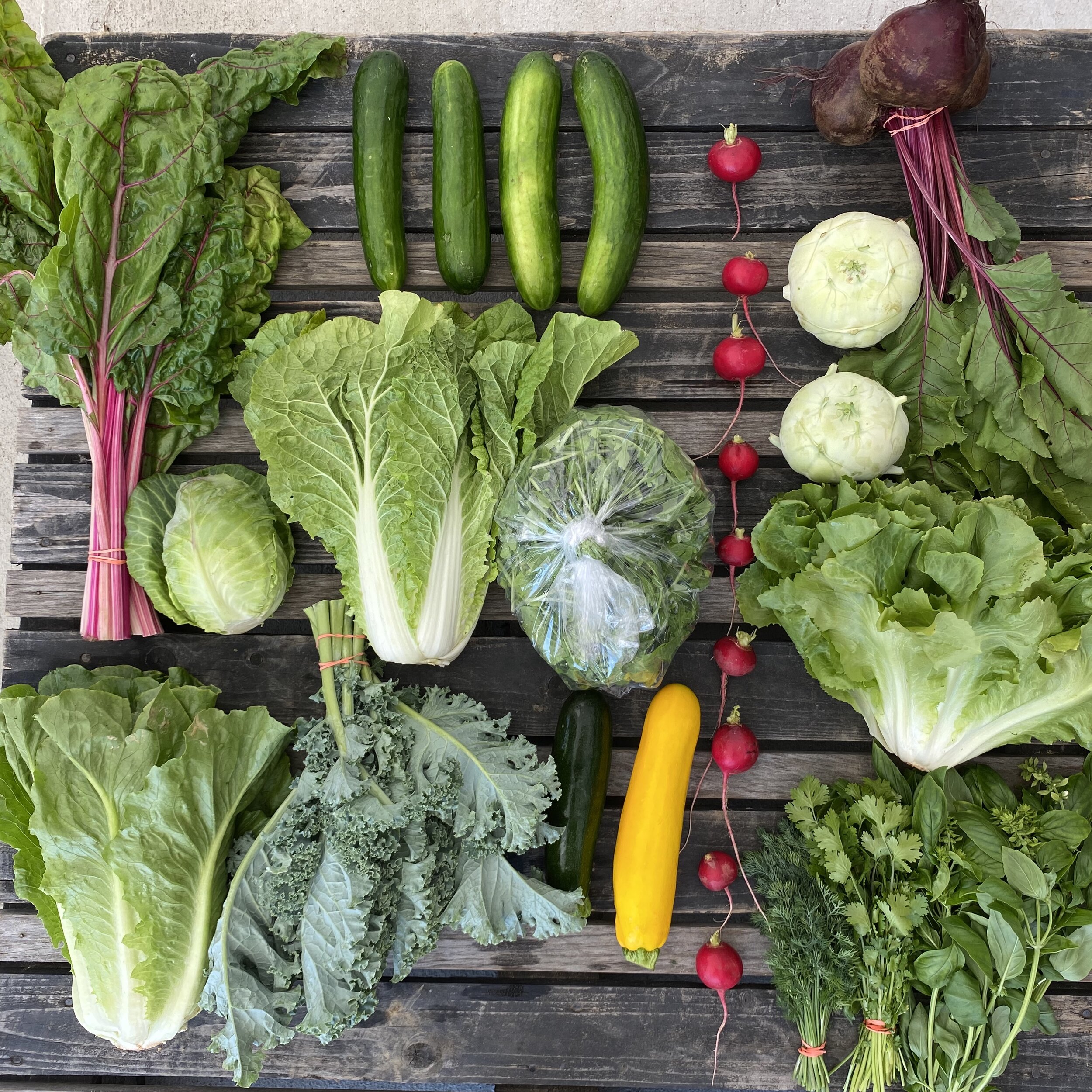
CSA Harvests have brought in thousands of pounds of beautiful food every week, including some farmer-favorites like Yokatta-Na, Lacinato Kale, Dandelion Greens and Escarole. (CSA Members: check your email for shareinfo@farmproject to receive weekly recaps, recipes, storage tips and more for your weekly share.)
Every week, amid the chaos of keeping our drive-through CSA distribution running smoothly, we look forward to a colorful new note of encouragement and appreciation from Angela and her picky-eater kids! (We see you and YOU ROCK.)

Thank you to all of our CSA members for your encouragement, support, patience, and gratitude!
And now—back to the fields!
Conversation on Cucumbers
By Kate Leahey, Education intern

Pre-Covid Photo - Every precaution is taken to keep you safe.
You’ve probably heard someone say “they’re as cool as a cucumber!” We might say it when a person is acting very calm and laid-back -- very cool. But have you ever wondered where this comes from? It originated from the fact that cucumbers are always much cooler on the inside than the outside temperature, sometimes up to twenty degrees cooler! This is because cucumbers are made up of 95% water, and water does not absorb heat as readily as the surrounding air, keeping the temperature lower. In the 17th century, physicians sometimes used cucumbers to cool down feverish patients due to this fact. Today, they are still a wonderfully refreshing veggie for summertime snacking -- that’s why we are celebrating them this July as our Harvest of the Month! When it gets hot outdoors, just take a bite of a cucumber, and you’ll be “cool” in no time.
What else can we learn about cucumbers? For starters, they are in the same family as some other familiar favorites: watermelons, pumpkins, and squash. Like these crops, cucumbers are creeping vine plants, meaning that they send out tendrils that can wrap around other objects, such as trellises, allowing the plant to climb -- or “creep” -- along. Cucumbers come in three main varieties. Slicing cucumbers are the most common and are usually grown to eat fresh. Pickling cucumbers, as the name suggests, are great for pickling. Did you know that the average American eats almost nine pounds of pickles each year?!? That’s a lot of pickles! Thank goodness for cucumbers. The last variety is Burpless or Seedless cucumbers, which lack seeds and can be easier for digestion. These cucumbers can be up to two feet long!

Though people all across the world eat cucumbers today, cucumbers initially originated from South Asia (modern-day India). Archaeologists have found through cave excavations that cucumbers have served as a food source for over 3,000 years! Now, thousands of years later, they’ve spread all across the world and are one of America’s Top Five Favorite Vegetables. It’s clear that cucumbers taste good, but they’re also good for us! As we already learned, cucumbers are 95% water, so they can help us stay hydrated. They also contain vitamins K and C, especially when eaten with the skin intact. Also, antioxidants, which can help lower the risk of chronic diseases, are found in cucumbers. Some people find that they are helpful with digestive health as well.


