
Spotlight on Community Gardeners at the Pershing Avenue Neighborhood Farm

By Tania Hernandez-Martinez and Chris Gavin

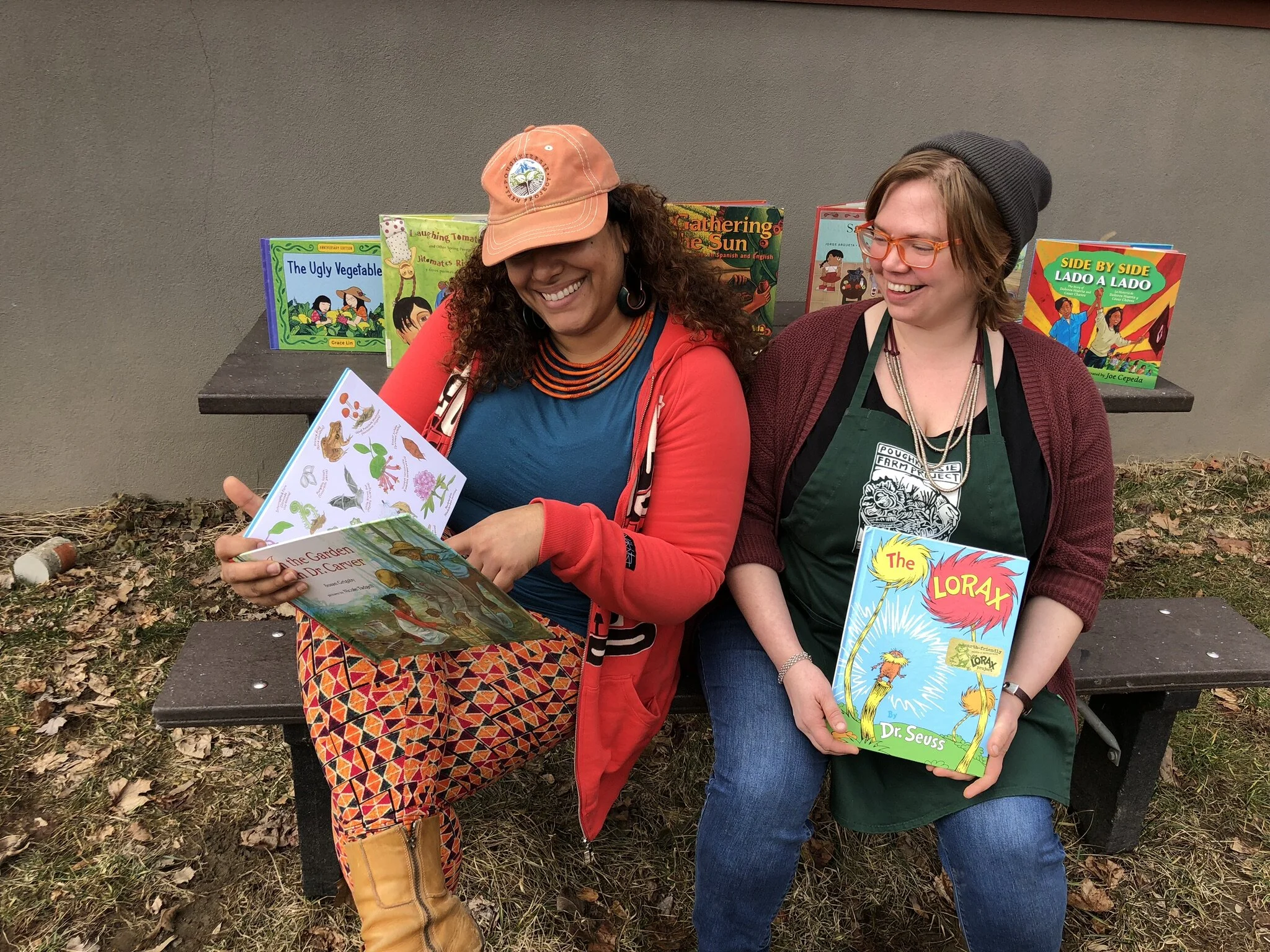
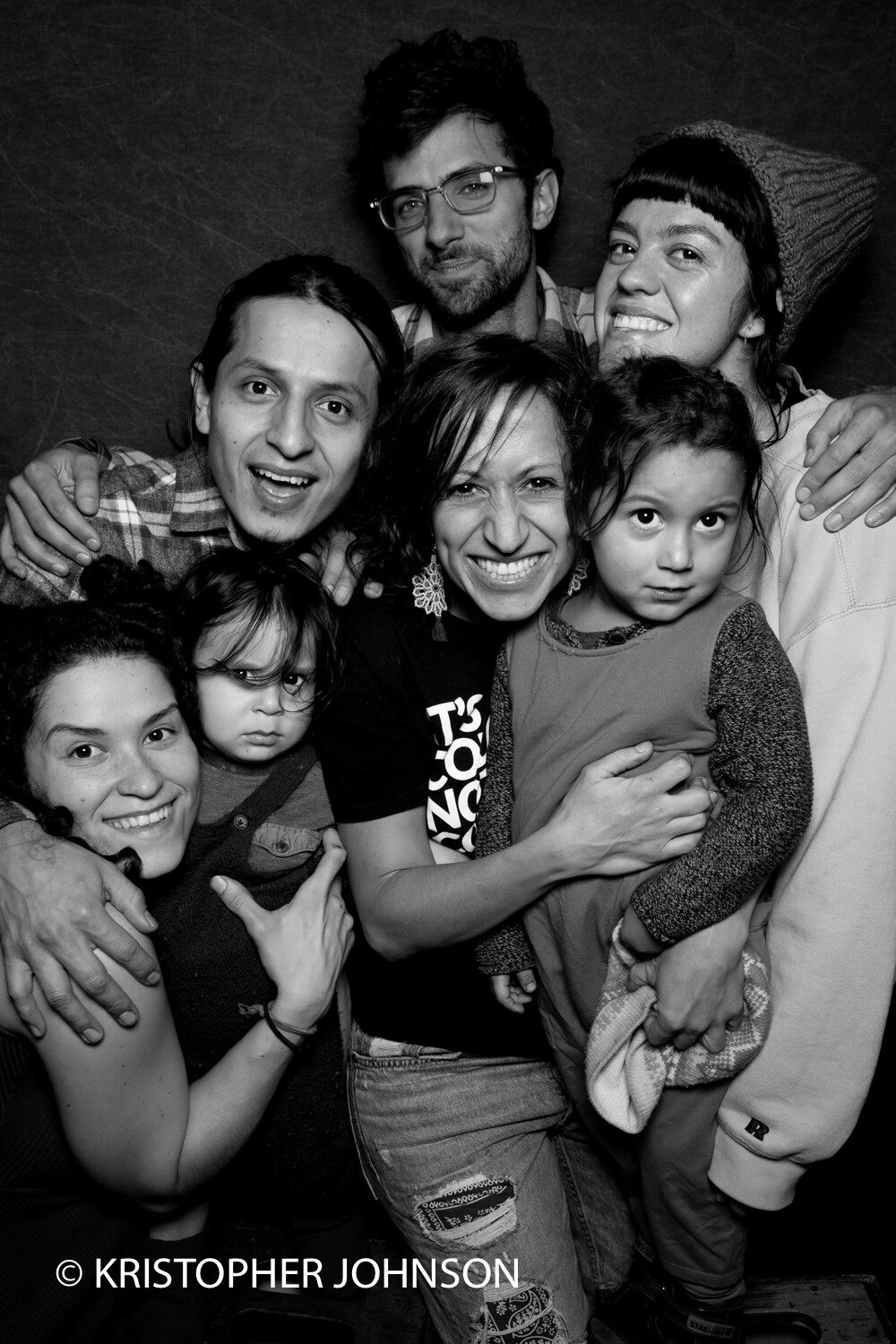
As we shift into fall and towards the end of the growing season, Poughkeepsie Farm Project is proud to reflect on our involvement in the first year of the Pershing Avenue Neighborhood Farm. This project is a community-driven urban agricultural initiative that aims to increase food access and food security for City of Poughkeepsie residents. The vision for this site is to be a community-lead food resource and skill-building hub for children and families that lack easy access to fresh fruits and vegetables and are in great need of quality programs for youth outside of school. The initiative is led by Scenic Hudson and has many community-based partners including Poughkeepsie Farm Project. Through our work at this site, PFP educators provide hands-on growing and cooking workshops as well as support for community gardeners new to growing their own food. In our efforts to connect with more stakeholders in the community, we have met new people and built stronger relationships with familiar faces. This month, we want to highlight new and returning members of our ever-growing community at the Pershing Avenue community gardens.

699CA10E-9D5E-4641-94B1-D6D051013109.jpeg

Heather Lee-Pitcher is a community member who has been a part of Poughkeepsie Farm Project through our Poughkeepsie Food Power @ Home remote learning initiative, volunteering in the meditation garden, and attending Community Harvest events. Heather was eager to continue practicing what she learned through our programs and is now a gardener at Pershing.

CFAEDE83-919F-4CA3-B0CC-C950722E0E0E.jpeg

Scott Emslie is a member of the Poughkeepsie community that has recently joined us. When he heard that there would be garden beds available for Poughkeepsie residents to use, he jumped at the idea of having others to bounce ideas off of.

Why did you decide to get involved with the Pershing Avenue Community garden?

  • Scott: I read about it and thought, I would like to get out in the community garden and meet some people. And also get some ideas for next season.

  • Heather: I think just being able to be with creation and enjoying it in small moments… the need for mindfulness. We are giving back to the community by investing [in this site]... the fact that there have been shootings means there has to be more of an initiative to get people here. I started gardening with PFP’s Food Power @ Home by planting microgreens and wanted to continue growing.

What was your relationship with gardening before this; is it something you or your family had been doing for a long time?

  • Scott: When I was growing up we had a fair sized garden, grew lots of food, but stopped gardening as the kids grew up. My mom, she came from a long line of farmers. When I heard about this I thought, ok, this is great.

  • Heather: My grandfather is originally from the South..turned 100 years old. As a child I would grow with my grandfather and cook fresh food. I remember as a kid he helped me turn my sandbox into a garden. Most times the memories [of gardening] are positive.

What’s been the best thing about being involved this growing season? What has been the worst?

  • Scott: I think [the best thing] is being involved for this first season, and getting to know the people. The worst is being unsure of the amount of rain.

  • Heather: The best thing is being able to do it, just having the opportunity to do something like this. It makes me appreciate the importance of eating the fruit of our labor. The worst thing would be the difficulty in the last months of being able to come because of safety.

Do you see yourself making an impact while gardening?

  • Scott: I think it does… it gets people more outdoors and teaches people where food comes from… And when you get too much and you got people here you can share [the food] with.

  • Heather: I do, definitely. My gardening has encouraged others. Lala Alvarado [PFP educator] encouraged me, and I encouraged others… It's a domino effect. It has encouraged healthy eating in my household, a lot of good cooking can come from the use of fresh herbs.

How has your life/community been positively impacted by this project?

  • Scott: I think it’s good for the community. I’d forgotten this park was here.. this gives a little bit more sense of community. Hopefully it will start to lessen the violence, you can start getting kids in and teaching them how to grow things.

  • Heather: I’m looking forward to it being further impacted…the people are looking forward to using the garden. It starts conversations of “how can I be involved?” It becomes one of those things that you talk about, and everyone likes to eat!

Would you encourage others/younger people to start gardens of their own?

  • Scott: Oh yeah, definitely. Gardening let’s you know where your food comes from, it gets people together.

  • Heather: Absolutely, I think it’s important for everyone. You begin to have a new appreciation for growing. And if you are spending time outside…it’s beneficial for your health. You are taking care of yourself, taking care of your health, and taking care of others, so why not?

What are you looking forward to next season?

  • Scott: Spreading out my garden, learning from other gardeners and saying, oh why didn’t I think of that?? There are a couple new things that I definitely want to try.

  • Heather: I look forward to what’s next, I love to see what’s new!
Pollinators and Pollination

Guest post by Madeleine Freundlich of The Environmental Cooperative

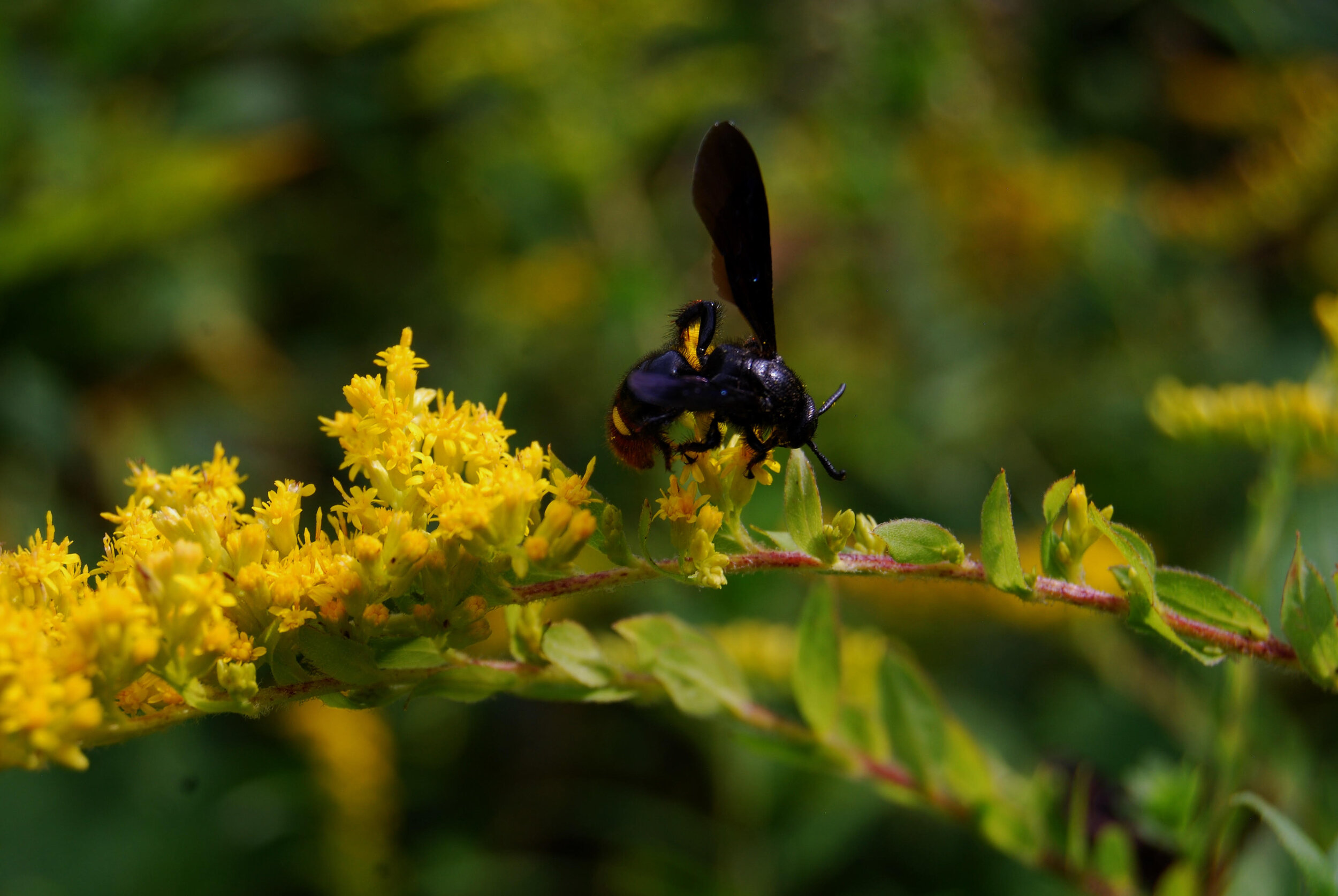
While the honeybee tends to be the poster child for pollination, these European bees stand in the shadow of over 3,600 native bee species that comprise a small portion of all pollinating animals in North America. Pollination is a complex relationship between all types of bees, beetles, moths, and more and most plant life. While we reap the benefits of beautiful blooms and food on the table, our pollinator friends are doing all the work behind the scenes. The ecological service pollinators provide is necessary for the reproduction of over 85% of the world’s flowering plants, including more than two-thirds of the world’s crop species. That means you can thank these creatures for most of your farm share! The United States alone grows more than one hundred crops that either need or benefit from pollinators, and the economic value of these native pollinators is estimated at $3 billion per year. While impressive, such a statistic warrants a little more context. Most native pollinators have only a handful of plant species that they have a symbiotic relationship with: the squash bee forages in the squash blossom, and, in turn, the squash pollen gets carried to another flower and pollination occurs. Since most pollinators only pollinate a handful of plant species, it requires a high amount of both pollinator and plant diversity to maintain an ecosystem.

unnamed.jpg

In many spaces that lack plant diversity, for example developed areas or mega-monoculture farms, pollinator populations are severely disrupted. The iconic monarch butterfly, for example, has experienced declines of approximately 84% in populations across North America. Habitat loss, alteration, and fragmentation, as well as diseases, pesticide use, and climate change are all threats to pollinators and the ecosystems that they support.

Here at The Environmental Cooperative, we recognize this issue and strive to use our resources to create places for all types of native pollinators to thrive. Recently the Town of Poughkeepsie has joined the Pollinator Pathways Initiative. This is a novel program that lays out guidelines and resources for starting native flower gardens so that native pollinators can prosper. These gardens act as an oasis for pollinators that have to travel a long way to find food due to development or the proliferation of non-native species. By encouraging residents, schools, organizations and municipalities to establish pollinator habitats wherever possible, we can achieve a patchwork pathway for native pollinators around the United States.

The Cooperative’s garden of natives in front of our offices includes Black-Eyed Susans, Goldenrod, Milkweed, and many others. These plots function in two ways: to facilitate the feeding and pollination symbiosis between pollinators and plants, and to look beautiful! While our focus is on native life, these plots also serve an aesthetic purpose that can be applied to your backyard or apartment window. We’ve also partnered with the PFP and the Ecological Preserve to create “Founder’s Plots”. These plots are planted with local native wildflowers, propagated from local seeds provided by the “Ecotype Project” through CT NOFA. The Founders Plots will provide a source of seed in coming years to help provide plants for community members that would like to start their own pollinator gardens.

What you can do:

  1. Learn about our native plants and animals! Take a look around the PFP or native plant gardens and see if any plants are catching your eye. The Lady Bird Johnson Wildlife Center has a wonderful and comprehensive database that can help you find what you’re looking for - as well as give you helpful tips for planting and maintenance. Similarly, Native Beeology is a great resource for learning about native bees! It is also run by Poughkeepsie Local, Tim Stanley, Director at Sharpe Reservation.

  2. Landscape for natives. If you have any sort of area that you currently maintain grass on, think about changing it over to a native garden. Trust us, the beauty, wildlife, and minimal maintenance certainly outweighs the merits of a lawn. Check out your local native nursery or find a friend willing to share a plant or two. Native plants are adapted to living in our specific region so they usually require little additional watering or pruning and spread easily.

  3. Make a bee a home. Whilst honey bees conjure up large group hives, most native bees are solitary. Creating nooks in your yard, leaving dried grasses over the winter, or putting in some logs as landscaping can give your bees a better chance at putting up permanent residence. Check out this sheet about native bee housing that the Environmental Coop put together for more information and lots of inspiration! Here is an additional blog about the importance of native bees.

The Environmental Cooperative at the Vassar Barns is an outreach and education initiative through Vassar College, located on the Vassar Farm and Ecological Preserve. We work to inspire engagement, support current efforts and develop new opportunities for conservation education, outreach, and research.

Poughkeepsie Farm Project Hosts Pershing Avenue Neighborhood Farm Grand Opening Event

POUGHKEEPSIE, NY – Poughkeepsie Farm Project (PFP) is hosting Harvest Fest to celebrate the grand opening of Pershing Avenue Neighborhood Farm, a new quarter-acre urban farm taking root in the heart of Poughkeepsie, on Saturday, October 2 from 11am-3pm. Harvest Fest is a culmination of a community-wide partnership with PFP, Ecological Citizens Project (ECP), Nubian Directions, Glynwood Foundation, Poughkeepsie Alliance, Community Changemakers, New City Parks, Scenic Hudson, Pershing Parknership, and the City of Poughkeepsie to create a community-led food resource and skill-building hub for children and families that lack easy access to fresh produce and after-school programming.

Visitors to Harvest Fest can experience a variety of games and activities including crafts, dancing, music, giveaways, stone painting, drawing, blueberry bush planting, free food, garden bed sign-ups, and DIY herbal body care products, all led by PFP, Scenic Hudson, and ECP. Free produce and school supplies will be available for visitors to take home along with PFP’s favorite recipes, tips, and ideas for how to use and store vegetables. Event speakers include Desiree King, from St. Marks AME Zion; Madeline Henriquez, PFP’s Executive Director; Tania Hernandez-Martinez, PFP’s Assistant Garden Educator & Community Garden Steward; Jocelyn Apicello, ECP’s Program Director; Nick Jackson, ECP’s Pershing Urban Farm Regenerator; Dave Llewellyn, Glynwood Center for Regional Food and Farming Director of Farmer Training; Will Artist, Nubian Directions II Inc. Construction Manager; and more.

Scenic Hudson took the first step in supporting and building healthy lifestyles for city children and families by spearheading the construction of the Pershing Avenue Neighborhood Farm last Fall. This Spring, YouthBuild Americorps Program of Nubian Directions II, Inc., built the farm’s tool shed and garden plots with help from PFP and Scenic Hudson who have also facilitated free cooking workshops and learning opportunities. To date, garden beds have been filled by local residents or community organizations that provide work or services within Poughkeepsie. Scenic Hudson and Glynwood have provided financial support to ensure the success of the Pershing Avenue Neighborhood Farm.

PFP’s Executive Director, Madeline Henriquez, said, “This event manifesting is in line with our mission to cultivate local leadership in sustainable farming, food access, and education, and to foster an inclusive, welcoming community for everyone.”

Scenic Hudson’s River Cities Program Director, Zoraida Lopez Diago, said, “Scenic Hudson is excited to be partnering with Poughkeepsie Farm Project and the other groups involved in the creation of the Pershing Avenue Neighborhood Farm. I also want to thank the City of Poughkeepsie for making this land available. The response of the neighborhood to these positive changes has been so gratifying, and we look forward to deepening this work in the years to come.”

PFP has grown its impact substantially since it began in 1999 with three acres of revived farmland leased from Vassar College and 70 CSA shareholders. Twenty years later, the organization has grown to support 500 CSA shareholders that take home 80% of the 90 tons of certified naturally grown produce harvested each year from PFP’s 15-acre urban farm. The other 20% is distributed through PFP’s Food Share program, which aims to address hunger, increase local food access, and create a healthier community.

The farm is also an educational resource for children, teens, and adults to experience learning through a variety of hands-on activities, such as identifying and harvesting vegetables, cooking with farm-fresh produce, and interacting with the environment on farm tours. Each year, PFP reaches more than 7,000 children and adults through its educational programming.

To learn more about Poughkeepsie Farm Project and the Harvest Fest Event, contact Executive Assistant, Lydia Hatfield at pfpadmin@farmproject.org.

Introducing the Poughkeepsie Farm Lager: A Limited Edition Collaboration with Zeus Brewing!

Zeus Brewing Company and Poughkeepsie Farm Project are partnering for something special this harvest season! Our P.F.L., aka, Poughkeepsie Farm Lager, is now available for pre-sales through the Poughkeepsie Farm Project farm store to support our annual Soup-A-Bowl fundraiser.

This limited edition beer is a first for the farm. Pat Lang, The Farm Project's farmer, worked in tandem with Zeus' Brewer, Amit Ram, to create an easy-drinking lager that highlights the bounty of fall. Made with Poughkeepsie Farm Project's butternut squash, sweet potatoes and honey, Ram made it a point to source malted barley, rye and hops all grown and processed in the Hudson Valley, making it a 100% Hudson Valley Beer and a perfect complement to comfort foods and family feasts alike.

“This was the perfect opportunity to work with another local City of Poughkeepsie business as it allows us to deepen our connection with our community while amplifying the breadth of opportunity in the Queen City”, Poughkeepsie Farm Project’s Executive Director, Madeline Henriquez says. “We are delighted to have the support of Zeus this year and look forward to working with our many local partner organizations and businesses to carry out our important work.”

Zeus Brewing Co. Owner, Jeremy Phillips, was excited to partner with the farm when the opportunity arose, “We thought working with PFP would be such a cool project. It’s not often that you can source ingredients to make a beer right from your backyard so to speak. We can’t wait to taste the beer and look forward to a great event on the 17th!”

P.F.L. is a light 4.3% ABV lager that Ram says, “is an expression of local agriculture and the community which it originates from joined together in balance and harmony. The result is a smooth crisp harvest lager designed to ease you into the fall season.”

Flavor notes of airy fresh baked biscuits with a subtle honeydew note in the background make P.F.L. a beer that won’t last long. Pre-sales are now open and run through October 10th on our farm store with a special price of $20 for a 4-pack of 16oz cans. Pick up will be at the Soup-A-Bowl, October 17th, from 12-4PM at the The Environmental Cooperative Barn at 50 Vassar Farm Ln, Poughkeepsie, NY 12603. No Soup-A-Bowl ticket purchase is needed to buy the beer, but with exciting raffle prizes, handmade pottery and delicious soups available, it’s hard not to!

Proceeds from P.F.L. beer sales and all sales made at the Soup-A-Bowl go directly back to the farm’s charitable giving and education programs, including our Farm to School initiative, community education and food share donations for food insecure neighbors. Locally-made beer that tastes good and does good? Now that’s something we can all toast to.

To grab your own 4-pack of P.F.L., visit our farm store.

What does language justice have to do with me as a White English-speaking educator in a multilingual community?

As we get back to normal and return to the familiar routines of a new school year, let’s be mindful of the uneven toll the past 18 months has taken on our communities, especially in regards to access to education. We have all been impacted by the past year and a half of lockdowns, we have all experienced losses large and small and bear the emotional toll of a time spent in fear and isolation. Yes - AND - imagine how those losses and challenges are multiplied in communities facing food aparatheid, lacking access to internet and technology to connect to remote learning, where families are forced to make the impossible choice between going to jobs as essential workers OR missing paychecks to care for and educate their children. And imagine the even greater challenge faced by families who do not speak and read English as their primary language.

C782B230-5A01-475B-89C2-9443A2A03331.jpeg

A major narrative in American culture is that education is a great equalizer that affords all young people the same opportunities to succeed and “pull themselves up by their bootstraps” as the saying goes. And over the past 18 months we have been forced to confront and question that myth as we’ve watched the socio-economic divides in our country widen and seen the disproportionate effect the pandemic has had on BIPOC communities, schools, and families. As we return to school and get “back to normal”, please consider that normal isn’t the ideal we should be holding ourselves to - we can do better than normal. Perhaps we can imagine and help manifest an educational system that truly centers equity and inclusion for ALL students. Our organization has realized we need to do more to make our programs and resources accessible to Spanish speaking families, and we acknowledge that we should have been engaging in language justice work long before now.

8E3E6E4D-A4C5-4B8C-9C16-5394287D909D.jpeg

This is the work we ALL must do. As a White English-speaking educator, I recognize that I cannot sit back passively as my BIPOC and multilingual colleagues work to make our systems more inclusive and equitable. So I’ve been asking myself what can I do from my position of power and privilege to elevate this work? I can express gratitude for the often overlooked labor of translation and interpretation. I can brush up on my conversational Spanish skills. I can create a word-rich learning environment that includes spoken and written language in both English and Spanish. I can uplift the voices of my colleagues on the forefront of language justice work. I can be mindful of asking a bilingual coworker to join me if I know an event or program will be attended by Spanish speaking families. I can encourage bilingual youth to see their language skills as an asset and not a burden. I can say a few sentences in not-so-great Spanish when meeting multilingual youth and families to show that I’m making an effort and releasing my perfectionist tendency to always want to get it exactly right.

If you have Spanish-speaking and multilingual families and youth in your lives, I encourage you to do what you can to help them feel supported, resourced, and seen. If you have friends or colleagues who are engaging in language justice work, say thank you, let them know that their efforts are noticed and appreciated and are making a difference. And let them know that they aren’t alone in this fight, that you recognize we ALL have a responsibility for fostering more equity and resilience in our community.

874AC6EC-97D4-4A37-9956-0C3C0078518C.jpeg

Meet Nick & Tania: New energy to the Pershing Ave Park & Urban Farm

Tania Hernandez-Martinez , Assistant Garden Educator and Community Garden Steward

Tania Hernandez-Martinez , Assistant Garden Educator and Community Garden Steward

Tania Hernandez-Martinez , Assistant Garden Educator and Community Garden Steward

“I come from a very tight knit family from a town in Oaxaca. I am currently a student studying computer science at Marist College and farming on my days off. I knew what I wanted to study since high school, but I also loved being outdoors, so when I needed to complete a certain amount of community service hours for my English class, I chose to do it with PFP. Now, a couple of years later, I am a staff member at PFP. I grew up in Poughkeepsie and I don't come from a wealthy family, so I am more than aware of the current situation here, which only inspired me more to help make a change for the future generations. Thanks to PFP, I have been able to eat healthier food more often; I have been able to connect more with not only my family/family history but my neighbors through gardening; and I have connected with people who believe that everyone deserves to have equal opportunities and deserve to speak whatever language they feel most empowered speaking. Through my work at Pershing Ave., I hope to share everything I have learned with the parts of the community I have yet to meet and I hope that we can build our own tight knit family.”


Nick "Nico" Jackson

Nick "Nico" Jackson

Nick "Nico" Jackson is a Hip Hop dancer from Poughkeepsie, NY. His style of dance is of his own creation, entitled ‘Water Style’, with a focus on body waves, gliding, popping and locking. He started dancing at 5 years old, to Michael Jackson, at family functions and local events. As a teenager, he formed his very own dance crew called 'Circus Freaks' and they performed together for 11 years. In 2015, they auditioned for ‘So You Think You Can Dance’. He graduated from Poughkeepsie High School class of 2012. From there, he began his personal journey of mastering his craft. Dancing is his life and he "can’t imagine where he would be without it." The reason why he teaches is to build confidence and encourage honest self expression in his students.

When Nico's not dancing, he's a chef, an avid gardener and he loves to travel. Nico started apprenticing with the ECP in June 2021 where he looks to master new skills in farming and community organizing. He plans to give back to his community through free fresh foods and Outreach events so that more stability can be created in his hometown and beyond. Providing a safe haven for people to Express, Learn and Grow with a specific focus on the Black community. This Fall, he will move to running a farm at Pershing Avenue Park in Poughkeepsie and work in collaboration with the Poughkeepsie Farm Project, Ecological Citizen's Project, Scenic Hudson and the surrounding community members.

Earlier in August, Nico started a few trays of seedlings. They include tatsoi cabbage, kale, romaine lettuce, summer lettuce, kohl rabi and spinach. He is planning to direct seed cilantro, parsley, and arugula. Stay tuned for more.

Seeding Language Justice at PFP

By Lala Montoya

Hola hola

Imagínate tratar de leer este artículo y no poder entender, escuchar algo y no poder participar.Ahora imagine leerlo en el lenguaje que tú entiendes, escuchar algo y poder participar

Imagine trying to read this article and not being able to understand, listening to something and not being able to participate.  Now imagine reading it in the language you understand, listening to something and being able to participate. 

How did it feel to read this and perhaps stumble into the confusion of finding a different language than expected? And then how liberating to find the translation below!

Wherever you might teach or learn, language is being used as a tool of communication, empowerment, liberation, or oppression. Language is one of the most powerful tools we can use and it is one of the first things we learn when very young. There is such joy in learning how to describe a taste, say what we like and what we are learning to like, explain what we agree with and what we think is unfair. 

For those of you reading this, you might find yourself living in the dominance of English.  Or perhaps you find yourself in a vibrant community like us here in Poughkeepsie, NY where - with 19% of the population being Hispanic or Latinx - you can walk down Main Street and you see areas where multilingual spaces are the norm; there are stores where one can walk in and feel transported to Latin America.  And yet when we step into the banks and schools, things go back to that dominance of English. To some, that might not seem so bad but just imagine..

You are a young 16 year old who just moved to the United States from South America. Your mother came with you fleeing a civil war and wanting to be with family who had moved here years before. You go to sign up for school, you’re undocumented and neither one of you speaks English. You walk into the school and it takes some time to find someone who speaks broken Spanish, finally a sight of tranquility where a secretary is able to help you get everything in place. Now fast forward 4-5 years, you have learned English, but your mother hasn't, she can’t help you with school work and you know she cries about it in the quiet of the night. After a long day at school before you head to work, you have to interpret for her at the bank, with your landlord, or help with immigration papers. That’s what I experienced as a young person, here in a country where there is nothing written in the Constitution about English being the national language.

As educators, we have a powerful role in making this young person's experience - and the experiences of all the youth we engage with - into something so different!  Imagine the young child walking into that school being welcomed by signs in different languages, a staff member accompanied by an interpreter who asks which is the language of preference! And this mother walks through the experience with understanding and without being judged. Four to five years later, that young person now has the tools of language justice because it’s talked about in schools and when they step into a bank or immigration office, translation and interpretation services are the norm! Both mother and daughter thrive and because culture shapes us and we also shape the culture, that mother and daughter can now be integral parts of their new community. They can become teachers, nurses, translators, and interpreters. They can be language justice workers in all their fields.  -- Language Justice (as defined by Communities Creating Healthy Environments): “For us, language justice is about building and sustaining multilingual spaces in our organizations and social movements so that everyone’s voice can be heard both as an individual and as part of a diversity of communities and cultures. Valuing language justice means recognizing the social and political dimensions of language and language access, while working to dismantle language barriers, equalize power dynamics, and build strong communities for social and racial justice”

So that is the dream we are cultivating at Poughkeepsie Farm Project. Along with many beautiful organizations in the Hudson Valley and worldwide.  We dream of supporting our community by having all that we offer at the farm available in Spanish and English.  We began this process during the pandemic when our staff realized that many parents and families needed more Spanish-language support now that learning was taking place at home, widening the gap between the English-dominant schools and the homes where English is not the language of preference.  To support everyone in our community, we hosted events like a read-aloud storytime with breakout groups in the 2 languages that are predominant in Poughkeepsie. We also started on the journey of translating all our learning materials into Spanish!!  Last summer, we began hosting multilingual community harvest events at the farm where Spanish and English were both equally important and present. The support of the community was felt, English-speaking folks were now making an effort to speak Spanish! It was beautiful, at one event after folks heard a land acknowledgement and explanation of language justice in both Spanish and English the whole audience present clapped! That moment still brings tears to these eyes! 


Picture of Lala M and Tania holding interpretation equipment. photo credit: Nora Evita Aresti

Picture of Lala M and Tania holding interpretation equipment. photo credit: Nora Evita Aresti

I want to share with you some of the basic things we can all do to begin engaging in the practice of language justice. We can have lesson materials and paperwork translated. We can have interpretation services available.  We can create and foster multilingual spaces. Let's break down the terminology so we can all better understand and truly support our students and their families with a language justice framework. 

  • Translation: Translation is a mental activity in which a meaning of given linguistic discourse is rendered from one language to another. It is the act of transferring the linguistic entities from one language in to their equivalents in to another language.
    https://translationjournal.net/October-2017/definition-of-translation.html
    This is a helpful tool and a starting point (not an end point!) for our schools and organizations.

  • Interpretation: The oral process of rendering a spoken message from one language into another. Interpretation is like taking translation to the next level and getting closer to a just space. But without translation and the proper outreach, we can host Spanish interpreted events and have no Spanish speakers attend.
    https://nesfp.org/sites/default/files/resources/language_justice_toolkit.pdf

  • Multilingual Space (as defined by Alice Johnson): “Combining bi-directional simultaneous interpreting with comprehensive document translation and multilingual facilitation, in order to integrate cross-race efforts in (multiple languages), shifting power away from traditionally dominant cultural norms…and intentionally using language to collectively build political analysis and cross-race allies among grassroots leaders.” Multilingual spaces are how I dream our farms, schools, and all organizations to be! 

  • Language Justice (as described in the Multilingual Strategies for Community Organizing): “Language justice is rooted in a history of resistance by communities and peoples whose voices and cultures have been suppressed for generations. Language justice is an alternative to that historical pattern of disenfranchisement and oppression. It affirms the fundamental rights of individuals and communities to language, culture, self expression, and equal participation.”

  • Language Justice (as described in Soul Fire Farm's Language Justice Guide): “We see Language Justice as a framework that transcends language access, and we uplift the languages that go beyond speech - the ones that are signed as well as the languages of the roots, the soils, the rains, the lands, and our more-than-human relatives. We understand that we filter these languages through our identities and privileges, including class, race, ethnicity, education, literacy, documented status, gender, sexuality, and physical and cognitive abilities. Holistic accessibility rooted in the struggle for justice is not merely about access - it is about participation, reflection, visibility, equity, shared leadership, radical acceptance, and love. Understanding each other is part of the foundation to loving each other. “

What a powerful tool for us as educators to incorporate language justice into our work.  Now I leave you with a quote from the song Awakening by Climbing Poetree: 
https://www.climbingpoetree.com/video/bioneers-2014/

Hold a mirror to your heart? What does it reflect?
What will be the message of the legacy we left? 
We were born for a reason, 
we can be whatever we give ourselves permission to be.

interpreting team

interpreting team


At PFP we are giving ourselves permission to learn, to acknowledge that we should have been delivering content in Spanish long ago. To also be realistic about our current capacity and start where we can. And continue to grow in sustainable, radical and magical ways.  So what are you giving yourself permission to try? Where do you see the journey of language justice and access beginning for you?

And just before you go to reflect on what we discovered,  I will share some of the beautiful and rich content we've been creating. I invite you to learn a little Spanish with us, or to plant a little container garden with us and uplift the language of plants as well.  And learn to prepare some of our favorite summer recipes.

And please if you know folks who can learn with us in spanish share our youtube channel with many videos in spanish 

And I remind you, “Hold a mirror to your heart? What does it reflect? What will be the message of the  legacy we left? We were born for a reason, we can be whatever we give ourselves permission to be.”  Give yourself permission as an educator starting today to welcome Language justice into the spaces you hold.  “Holistic accessibility rooted in the struggle for justice is not merely about access - it is about participation, reflection, visibility, equity, shared leadership, radical acceptance, and love.” Soul Fire Farm Language Justice Guide

Understanding each other is part of the foundation to loving each other. Let's radically accept each other and nurture communities rooted in love so that we can all thrive and grow! 

Herbs Change Everything! Growing Culturally Rich Plants in PK Gardens

Tania (left) and SonyaJoy led a cooking class at Pershing Avenue Gardens Saturday, August 14th featuring three globally sourced, locally grown herbs: papalo, Besobela (Ethiopian holy basil), and Akoko Mesa basil.

Tania (left) and SonyaJoy led a cooking class at Pershing Avenue Gardens Saturday, August 14th featuring three globally sourced, locally grown herbs: papalo, Besobela (Ethiopian holy basil), and Akoko Mesa basil.

When we think of food justice, access and affordability are often centered. Cultural relevance is also an important part of the mix! The foods that are connected to our memories, hearts and worldview are the often those we are confident to identify, cook, and enjoy fresh. Maybe like me, you grew up eating certain vegetables and remember your grandmother’s hands washing them under sparkling water. Maybe seeds of these plants have been passed down in your family, a loving forethought of a bright future. When we include who we are and where our people come from, we can get a fuller picture of what food justice looks, tastes and smells like. We can grow vegetables and herbs from all over the world in our region, transforming global foods into local treasures. As a country of immigrants, we can savor the flavors of home.

Trapped indoors due to COVID and cold weather, winter provided a great time to do research. Over these months, PFP Green Jobs young adult interns did diligent research, narrowing down a broad search for herbs and vegetables that include palates from Africa, Central and South America and Asia. Two online resources stood out among the rest. True Love Seeds’ online seed catalogue has in-depth descriptions of the cultural roots of each plant that provides much connection to source than the average seed packet. The University of Vermont’s Center for Sustainable Agriculture’s “Global Food, Local Food: Guide to Growing, Harvesting and Preserving African & Asian Crops in the Northeast” is a wealth of information on plants like African Eggplant (also called White Garden Egg) and Bitter Melon.

A few highlights from our research included a range of herbs. Herbs are the heavyweights of the kitchen in my opinion. Thai basil can take a curry from flat to herbaceous and citrusy. A dose of chimichurri, a sauce made of vinegar, chili and green herbs, will brighten any meat, fish or vegan protein immediately. Below are 2 of my personal favorites. Akoko Mesa Basil from Ghana is an earthy, minty basil variety. The name means “Chicken Dance” since this herb can make chicken, and many other foods, really sing! We sourced our Akoko Mesa Basil seeds from Baker Creek Heirloom Seeds. Papalo originated in South America, and is often eaten as a fresh finishing herb typically kept on the table and tear onto your food right before you dig in. If you like cilantro, you might adore papalo! It’s similar, but even more bold. As a gardener, it’s a tremendous gift since papalo grows all summer long - it’s not prone to bolt in the heat. Terroir Seeds and Johnny’s Selected Seeds both carry papalo, unfortunately it doesn’t grow wild in our region as it does in the southwest.

Akoko Mesa Basil from Ghana, featured on Baker Creek Heirloom Seeds' Rare Seeds website.

Akoko Mesa Basil from Ghana, featured on Baker Creek Heirloom Seeds' Rare Seeds website.

Papalo, a summer heat-loving alternative to cilantro.

Papalo, a summer heat-loving alternative to cilantro.

Thanks to the dedication of PFP educators, especially Kathryn Brignac, Farm to School Manager and our co-conspirator Greenhouse Manager, André Luiz de Oliveira Domingues, we were able to start a selection of seeds this spring. With some diligent effort and lots of watering, seedlings were able to make it into the ground in the PFP Seed Saving Garden as well as some of the new, PFP-supported gardens which are only in their first or second seasons including Pershing Avenue, Rip Van Winkle Apartments, and Hudson Garden Apartments / Boys and Girls Club Community Gardens.

Besobela Ethiopian Basil from True Love Seeds, currently grows in the PFP Seed Saving Gardens.

Besobela Ethiopian Basil from True Love Seeds, currently grows in the PFP Seed Saving Gardens.

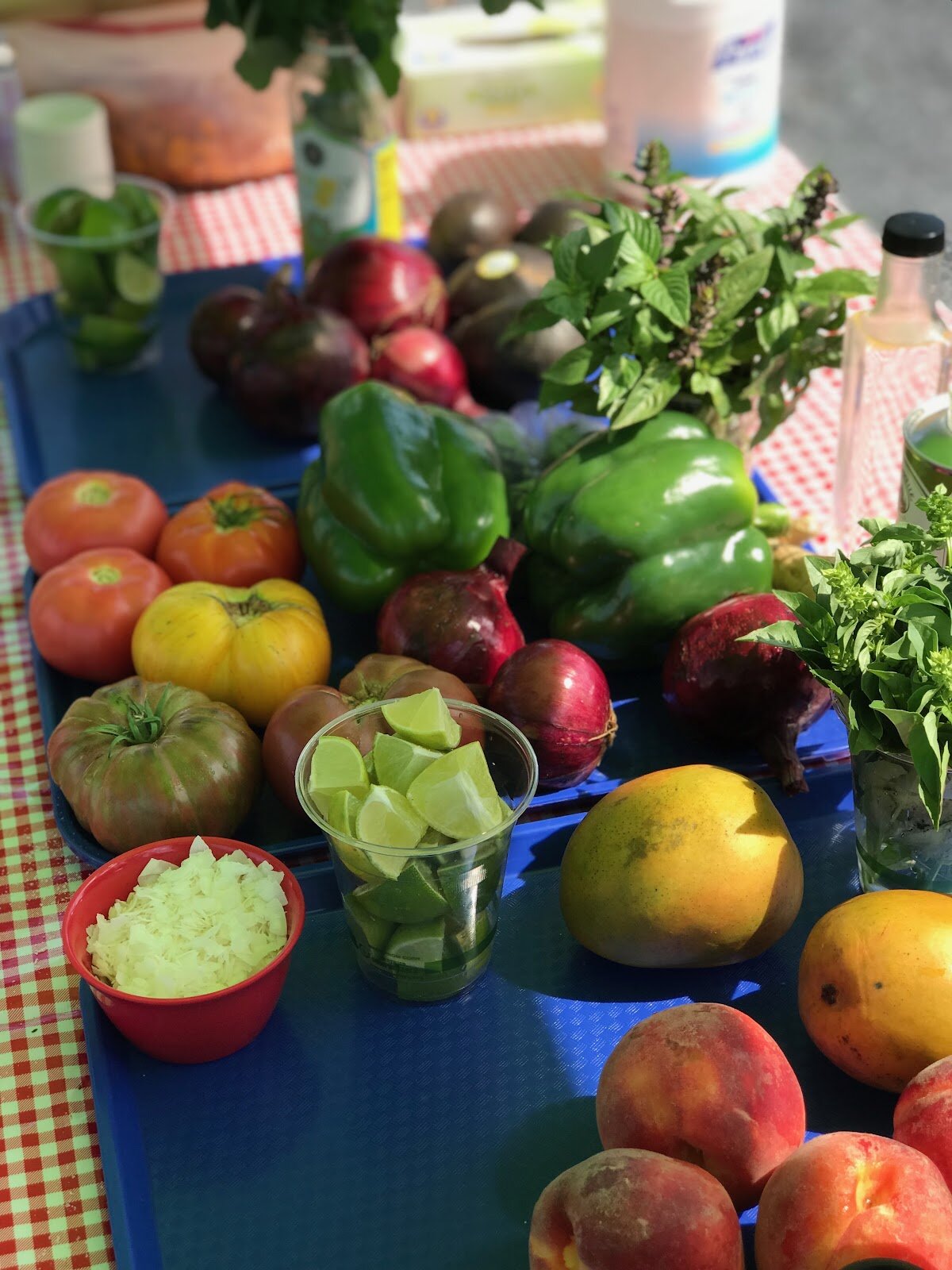
Now that we have several varieties of herbs, as well as Aji Dulce Peppers, African Eggplant, and Mitsuba (Japanese Parsley) growing in PFP and community gardens, we can get cooking! Saturday, August 14th Tania Hernandez-Martinez, Assistant Garden Educator and Community Garden Steward, and I led a cooking workshop to trial some of these new herb varieties. With Helana Mazurek, Scenic Hudson SCA Intern/Event and Community Project Assistant, and community members we prepared Summer Squash Tacos with Papalo Guacamole, Akoko Mesa Basil Peach Mango Salad, and Timatim (Ethiopian Tomato Salad) with Besobela Basil. Our cooking classes are COVID-safe, everyone wears masks and prepares their own tasting without sharing food. These same recipes will be featured at our upcoming Adult Gardener Workshops on Saturday September 18th. Registration coming soon for Poughkeepsie residents. Please email gardens[at]farmproject[dot]org for details.

Ingredients for cooking workshop included ripe summer tomatoes, crispy peppers, and juicy peaches from PFP and local farms with 2 varieties of African basil.

Ingredients for cooking workshop included ripe summer tomatoes, crispy peppers, and juicy peaches from PFP and local farms with 2 varieties of African basil.

We miss you out here! Volunteering on the farm

The PFP of 2 years ago, at least in appearance, looks a bit different from the PFP of today, for the significant reason of a global pandemic and a restructuring of the CSA! One functional result for all of us has been no more work share program and fewer CSA members working with us on harvest, weeding, and more. We have heard from some of you that the program is missed, and we understand! We also miss seeing your many faces joining us on the farm for work, rain or shine, throughout the season.

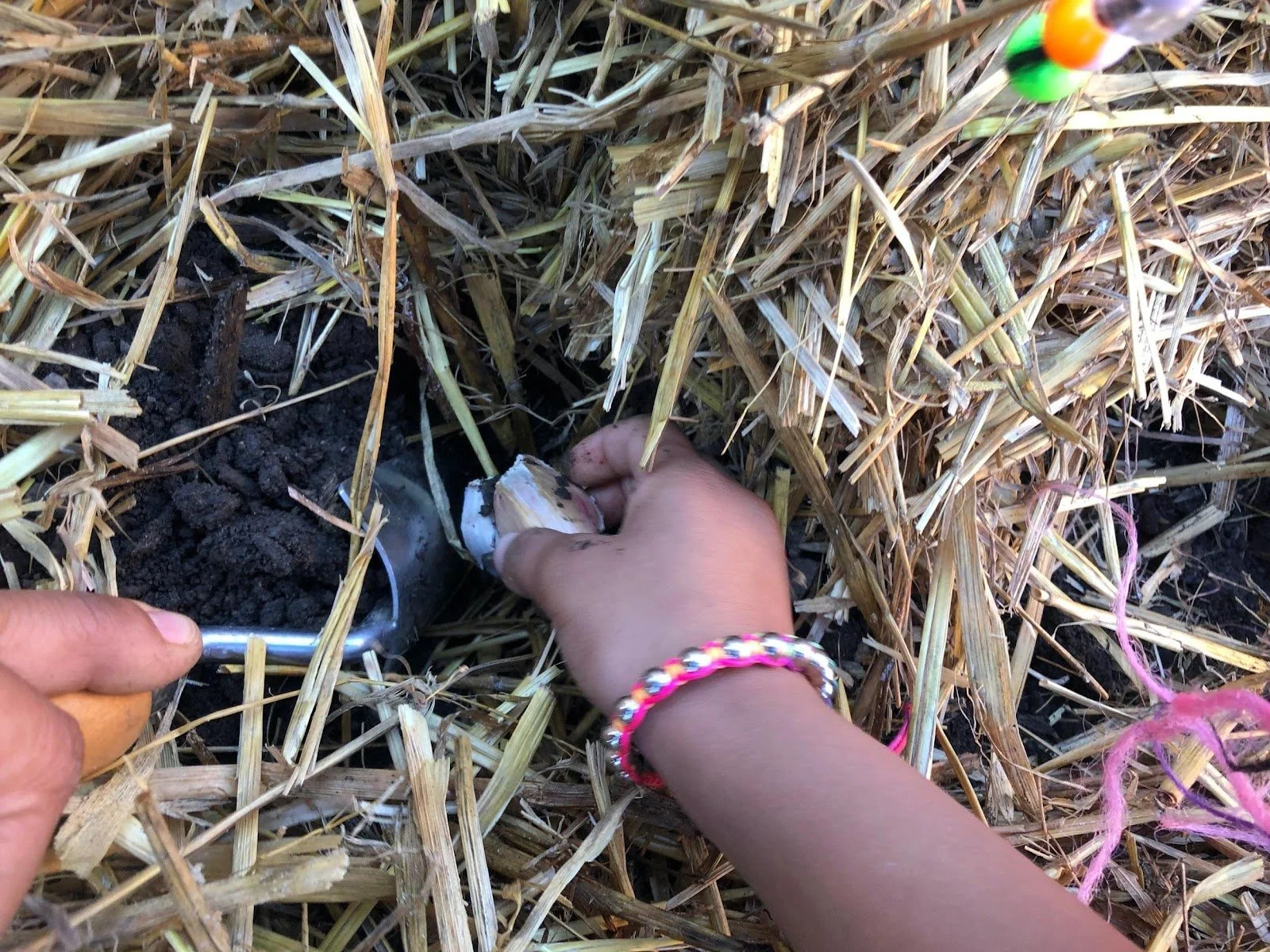
German with part of the 2021 garlic

German with part of the 2021 garlic

Fortunately, for those missing the important connection to the food and work of PFP from lending a hand through work share, the opportunity to work still exists! The work share program allowed CSA members to access a lower CSA share price in return for a number of labor hours on the farm during the season. By transitioning to a new tiered, sliding scale model for CSA, shares are available to all at a variety of prices. In this model we trust everyone to make the pricing choice that is appropriate for their situation, but we avoid the requirement to work, meaning the multiple pricing options are not linked directly to physical ability.

Garrett & Rachel harvesting carrots

Garrett & Rachel harvesting carrots

What does this mean for folks missing work share shifts? You are still VERY welcome to spend some hours helping to grow, care for, harvest, and process plants and food alongside the farm team! This year, we have approached volunteer support differently from how it was done in the past, offering volunteer orientations in which we share about PFP as an organization and lay out the various volunteer opportunities that exist here.


A volunteer shift on the farm will look very much like a work share shift! We still count on the support of our community to bring in huge harvests of nourishing Poughkeepsie-grown vegetables and to care for the land by weeding, as well as managing tarps, row cover, and mulch materials. Volunteers have helped in a major way in 2021, weeding our new raspberry and rhubarb plantings, weeding potatoes and sweet potatoes, weeding onions, garlic, and leeks, and harvesting loads of garlic. There are upcoming opportunities to provide labor support with garlic cleaning/sorting, onion harvest, all sorts of weeding, potato harvest, carrot harvest, high tunnel bed preparation, and clearing mulch materials from harvested beds to make way for fall cover crop!

Volunteer group from CIA weeding onions

Volunteer group from CIA weeding onions

Are you someone who would like to be notified of opportunities to lend a hand on the farm when it is most needed? Simply head to our volunteer page at https://www.farmproject.org/volunteer , select ‘Register’, and fill out the short form. Farm support shifts will generally occur at least once a week, and to accommodate different schedules they will occur on mornings, afternoons, weekdays, and Saturdays. Registering as an interested volunteer is also a great way to hear about other support opportunities at PFP, including guided work caring for the Meditation and Discovery Gardens and stewarding Poughkeepsie school garden sites with the PFP Education team.

PFP farm field walk

PFP farm field walk

We sincerely look forward to working alongside new and familiar faces in the coming months as we bring in abundant fall harvests, soak up the sun (or rain), and prepare for the winter farm season! See you soon.

-Pat

Sharing is Caring... Or is it?

In June, zucchini is exciting. It's tender, and small. It's a sign of summer, and one that signals the approach of tomatoes, melons, peppers and eggplant. But by August, zucchini's charm has worn off. Anyone who has ever grown zucchini knows how much zucchini a healthy plant can produce... and how big they get if you miss one.

By the end of summer, zucchini is everywhere. And no one wants to see another baseball-bat-sized zucchini.

And yet, it keeps on coming.

What to do with all the zucchini? You've grilled it and stuffed it. You've made zucchini bread, of course -- with AND without chocolate. Because this isn't your first rodeo. You've made ratatouille, zucchini chips, lasagna and cold soup. You've made zoodles and googootz and fritters.

You're out of recipes, and out of ideas. There's only one thing left: Sneak some zucchini onto your neighbor's porch.

Luckily for you, there is a day for this.

This year, National Sneak Zucchini onto your Neighbor's Porch Day falls on Saturday, August 7. It's a great opportunity to share the bounty with your unsuspecting neighbors -- just make sure to avoid any "No Trespassing" signs and pointy-toothed pets. To show that you come in peace, we highly recommend accompanying your squash deposit with your favorite recipe... maybe even a "Happy Zucchini Day!" note.

And if, by some stroke of good fortune, you find yourself on the receiving end of National Sneak Zucchini onto your Neighbor's Porch Day... well, count your lucky stars, and steel yourself for another batch of zoodles.